Miami, FL, March 05, 2026 (GLOBE NEWSWIRE) -- Disclaimer: This article contains affiliate links. If a purchase is made through these links, a commission may be earned at no additional cost to the buyer. This article is an informational overview and does not constitute medical, health, or dietary advice. Supplements are not intended to diagnose, treat, cure, or prevent any disease. All product details described below are stated as presented by the company and should be verified directly on the official website before any purchasing decision. Always consult a qualified healthcare professional before starting any new supplement regimen.
If you have been researching magnesium deficiency online — particularly after seeing an ad describing the "invisible deficiency" that standard blood tests reportedly miss — you have almost certainly come across NativePath Native Balance. The phrase continues to generate significant consumer interest, especially among adults over 50 who experience unexplained muscle cramps, restless legs, sleep difficulties, or persistent nerve discomfort despite lab work that comes back normal.
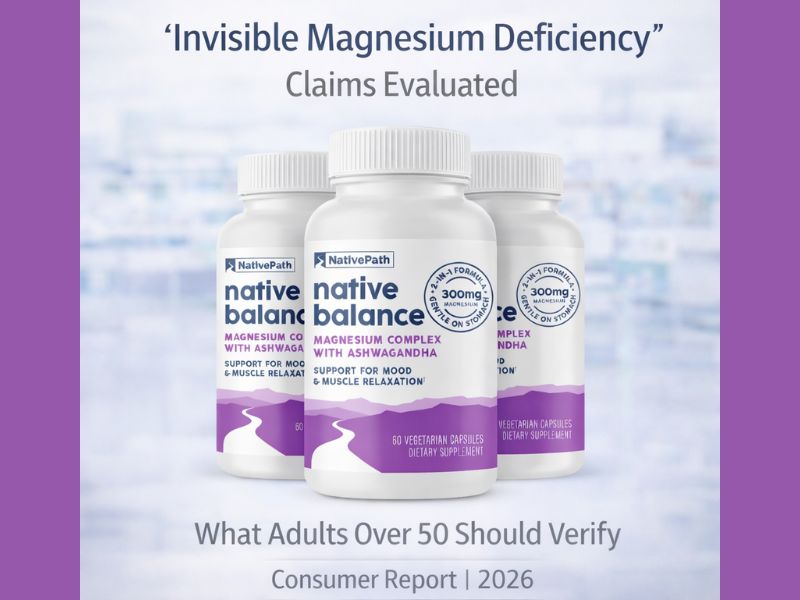
NativePath, co-founded by Dr. Chad Walding (Doctor of Physical Therapy and Certified Nutrition Specialist, according to the company), positions Native Balance as a magnesium complex built around Aquamin™ marine magnesium and ashwagandha. The product's central marketing narrative centers on seven warning signs that the company states may indicate magnesium deficiency — even when routine blood panels appear unremarkable.
This consumer report examines publicly available marketing statements, ingredient-level research published in peer-reviewed journals, and where gaps remain between the company's marketing language and product-level clinical evidence. No published clinical trial has been identified that evaluates Native Balance as a finished product for health outcomes. The goal is to provide an informational overview of the company's stated claims, relevant ingredient research context, and key verification steps consumers may consider before making any decisions.
View the current NativePath Native Balance offer (official NativePath page).
Individual results vary. Dietary supplements are not substitutes for balanced nutrition, regular physical activity, or professional medical guidance. Consult a qualified healthcare provider before starting any new supplement regimen.
The "Invisible Deficiency" Framework: What NativePath Claims vs. What Research Can Confirm
The central marketing narrative behind Native Balance describes magnesium deficiency as an "invisible deficiency" because, according to the company's product page, approximately 99% of the body's magnesium is stored in bones and cells rather than in the bloodstream. The implication is that standard serum blood tests may not detect suboptimal magnesium levels, leaving people unaware of a deficiency that could be contributing to a range of symptoms.
This claim has a basis in published research. According to the National Institutes of Health (NIH) Office of Dietary Supplements, serum magnesium levels represent less than 1% of total body magnesium, and normal serum concentrations can be maintained even when intracellular stores are depleted. The NIH notes that assessing magnesium status is difficult because most magnesium resides inside cells or in bone. This is a recognized limitation in clinical nutrition assessment — not a concept unique to NativePath's marketing.
The company's claim that approximately 70% of Americans are deficient in magnesium requires careful interpretation. Published data varies depending on the metric used. A 2012 analysis published in Nutrition Reviews estimated that roughly 48% of the U.S. population consumed less than the Estimated Average Requirement (EAR) for magnesium from food alone. The 70% figure, which appears in some popular health media, often reflects broader estimates that include subclinical deficiency — a state where intake falls below optimal levels without necessarily reaching clinical hypomagnesemia. The distinction between dietary inadequacy and clinical deficiency is meaningful, and consumers should understand that these are not identical conditions.
In the context of adults over 50, the concern is more well-established. Published research confirms that magnesium absorption decreases with age, renal excretion increases, and dietary intake tends to decline in older populations. The NIH specifically identifies older adults as a group at elevated risk for inadequate magnesium intake.
NativePath's marketing identifies seven signs of magnesium deficiency: painful muscle cramps, brain fog, changes in blood pressure, restless legs, trouble falling asleep, declining bone health, and nerve discomfort. Each of these symptoms has some connection to magnesium in published literature, though the relationship is not always as direct as marketing language implies. These are also common symptoms with multiple potential causes, and magnesium deficiency is only one possible explanation among many. Anyone experiencing persistent symptoms should consult a healthcare provider for proper evaluation rather than self-diagnosing based on supplement marketing.
Aquamin™ Marine Magnesium: What Ingredient-Level Research Shows
Native Balance's primary active ingredient is Aquamin™, a marine-derived magnesium sourced from seawater off the coast of Ireland, according to the ingredient supplier. Unlike synthetic magnesium supplements such as magnesium oxide or magnesium citrate, Aquamin™ is a naturally occurring multimineral complex that the supplier states contains magnesium hydroxide along with over 72 trace minerals, including calcium, potassium, iron, and zinc.
Published research on Aquamin™ does exist at the ingredient level. A 2018 study published in Nutrients (Felice et al.) used the established INFOGEST in vitro digestion model and Caco-2 cell assay to compare the bioaccessibility and bioavailability of Aquamin™ magnesium against magnesium oxide (MgO) and magnesium chloride (MgCl₂). The researchers reported that Aquamin™-derived magnesium demonstrated significantly greater bioavailability than magnesium oxide in the in vitro model used and displayed a comparable absorption profile to magnesium chloride, which is considered a highly bioavailable form.
A more recent 2024 study published in Methods (ScienceDirect) examined the solubility and tolerability of Aquamin™ magnesium in a randomized, double-blind, placebo-controlled study involving healthy older adults over a 12-week period. The researchers reported that Aquamin™ exhibited superior solubility compared to commercial magnesium bisglycinate products in the simulated digestion model used, and that the supplement was well-tolerated with no significant adverse events reported during the study period.
A January 2026 study published in Nutrients (MDPI) further investigated magnesium bioavailability using Caco-2 cell monolayers and found that Aquamin™ Mg Soluble showed significantly higher bioavailability compared to certain magnesium bisglycinate sources when digested alongside food materials in vitro. The researchers attributed this finding to the multimineral profile and the specific processing characteristics of the marine-derived source.
These are notable findings in the published literature. However, important caveats apply.
The studies above examined Aquamin™ as an ingredient, not NativePath Native Balance as a finished product. No published clinical trial appears to have evaluated Native Balance's specific formulation — including its combination with ashwagandha — for any health outcome in human subjects. This is ingredient-level research; NativePath Native Balance as a finished product has not been independently studied in published clinical trials.
It is also worth noting that some Aquamin™ research has been conducted with involvement from Marigot Ltd., the company that produces and supplies the Aquamin™ ingredient. While the research appears in peer-reviewed journals, consumers should be aware of this relationship when evaluating the evidence base.
Ashwagandha: The Second Active Ingredient
Native Balance also includes ashwagandha (Withania somnifera), an adaptogenic herb with a long history in Ayurvedic medicine and a growing body of published research in Western scientific literature. According to the NativePath product page, the company describes ashwagandha as a "youth-giving herb" that supports stress relief, a healthy inflammatory response, and cognitive function.
Published research on ashwagandha does support several of these positioning statements at the ingredient level. A 2019 systematic review and meta-analysis published in the Journal of Alternative and Complementary Medicine examined five randomized controlled trials and found that ashwagandha supplementation was associated with statistically significant reductions in stress and anxiety scores compared to placebo. A separate 2021 study involving 125 adults, referenced on the NativePath product page, reported improvements in memory, focus, and sleep quality among participants taking ashwagandha.
Ashwagandha has also been studied for its effects on cortisol levels. Multiple studies suggest that supplementation may help modulate cortisol response, which is relevant to the stress-relief claims the company makes. Research published in the Indian Journal of Psychological Medicine (Chandrasekhar et al., 2012) reported significant reductions in serum cortisol levels in adults taking a standardized ashwagandha root extract compared to placebo.
The key consideration is that ashwagandha research uses specific standardized extracts at defined dosages, typically between 300 mg and 600 mg per day. The NativePath product page does not appear to disclose the exact amount of ashwagandha per serving or the specific extract standardization used. Without this information, consumers and healthcare providers cannot directly compare the product's ashwagandha content to the dosages used in published research.
These individual findings do not mean Native Balance as a finished product replaces prescribed treatment or delivers the same outcomes observed in controlled research settings with isolated ingredients.
How Consumers Evaluate Magnesium Supplements Like Native Balance
When researching magnesium supplements — whether Native Balance or any other product — consumers tend to weigh several factors before making a decision. Understanding what those factors are, and how they apply to your specific situation, can help you cut through marketing language and focus on what actually matters for your health.
Ingredient sourcing and research background. Published research confirms that magnesium bioavailability varies significantly depending on the form used. Aquamin™, the marine-derived magnesium in Native Balance, has published in vitro research comparing bioavailability across magnesium forms, including magnesium oxide, under specific laboratory models. Consumers evaluating any magnesium supplement should ask: what form of magnesium does this product use, and is there published research on that specific form? That question applies equally to Native Balance and to every other product on the shelf.
Formulation transparency. Some supplements provide full-disclosure labeling that lists exact milligram amounts for every ingredient. Others use proprietary blends or do not prominently disclose individual ingredient dosages. The NativePath product page does not appear to prominently disclose the exact amount of ashwagandha per serving or the specific extract standardization. If you need to compare dosages against published research ranges — or if your healthcare provider needs that information to assess whether a supplement fits your regimen — this is worth confirming directly with the company before making any decisions.
Combination formulas vs. single-ingredient supplements. Native Balance combines Aquamin™ marine magnesium with ashwagandha in a single daily capsule. Some consumers prefer the convenience of a combination formula. Others prefer single-ingredient supplements that allow precise dosage control. Neither approach is inherently superior — it depends on what your healthcare provider recommends and what fits your personal supplementation goals.
Digestive tolerability. Gastrointestinal side effects are a common reason people stop taking magnesium supplements. According to the published 2024 tolerability study, Aquamin™ marine magnesium was well-tolerated in older adults over a 12-week period with no significant adverse events. If you have experienced stomach discomfort with other magnesium forms, this published tolerability data may be a relevant data point — though individual responses always vary.
Ingredient-level research vs. finished-product evidence. This may be the most important distinction for any consumer evaluating any supplement. Aquamin™ and ashwagandha both have published ingredient-level research. However, no published clinical trial has evaluated NativePath Native Balance as a finished product for any health outcome. This distinction does not determine effectiveness; it clarifies what the published evidence does and does not directly test.
Questions worth asking before any magnesium supplement purchase: Have you discussed your magnesium status with a healthcare provider? Are your symptoms being evaluated for all potential causes — not just mineral deficiency? Do you know what form and dosage of magnesium your situation calls for? Are you comfortable with ingredient-level research supporting a product, or do you prefer finished-product clinical data? And have you reviewed the specific ingredient amounts per serving to compare against published research?
These questions can help consumers approach supplement marketing claims more carefully — regardless of which product is being evaluated.
NativePath Native Balance Availability and Stated Terms (Company Information)
According to the company's website, NativePath Native Balance is available in several package options. Pricing and availability are determined by the company and may change. According to the company's published materials, orders are described as one-time purchases with no subscription requirement.
The company states that all orders are protected by a 365-day money-back guarantee. As with any guarantee, consumers should review the complete refund terms, conditions, and return procedures directly on the official website before making any decisions, as guarantee details are subject to the company's current terms and conditions.
View the current NativePath Native Balance offer (official NativePath page).
Magnesium Blood Testing Limitations: What the Research Actually Says
This consumer report examines publicly available marketing statements and ingredient research — not medical diagnoses. That said, one of the more distinctive elements of Native Balance's marketing is its emphasis on the limitations of standard blood tests for detecting magnesium deficiency. This claim deserves careful evaluation because it has direct implications for how you interpret your own lab results.
The standard clinical test for magnesium is serum magnesium concentration. According to the NIH, normal serum magnesium ranges from approximately 0.75 to 0.95 mmol/L (1.7 to 2.2 mg/dL). Values below this range indicate clinical hypomagnesemia.
However, multiple published sources confirm that serum magnesium is an imperfect measure of total body magnesium status. A 2018 review published in Scientifica noted that serum magnesium represents only about 0.3% of total body magnesium and that normal serum levels can coexist with intracellular depletion. The author described this as a recognized limitation in clinical practice.
Alternative tests exist, including red blood cell (RBC) magnesium, ionized magnesium, and magnesium loading tests, which may provide a more complete picture. However, these tests are less commonly ordered in routine clinical practice and may not be covered by all insurance plans.
NativePath's marketing uses this well-established scientific limitation to position its product as a solution. While the underlying information about blood test limitations is consistent with published research, consumers should be cautious about making a direct leap from "standard blood tests have limitations" to "I therefore need this specific supplement." The appropriate step for anyone concerned about magnesium status is to discuss testing options — including RBC magnesium testing — with a healthcare provider, who can recommend the most appropriate assessment method and, if necessary, the most suitable supplementation approach for your individual situation.
Magnesium Supplement Forms Discussed in Scientific Literature
The following discussion summarizes how scientific literature has compared magnesium forms and ingredient characteristics. It does not evaluate Native Balance as a finished product or establish clinical outcomes for any specific brand.
The magnesium supplement category includes dozens of formulations using different magnesium compounds. Understanding how these forms differ in published research provides useful educational context for consumers evaluating any magnesium product.
Magnesium oxide is among the most widely available and least expensive forms. However, published research consistently reports that it has lower bioavailability in vitro compared to other forms. The 2018 Felice et al. study reported that Aquamin™ marine magnesium demonstrated significantly greater bioavailability than magnesium oxide in the in vitro digestion model used.
Magnesium citrate is commonly used in clinical settings for its relatively favorable absorption profile. It is generally described in published literature as a reliable supplemental form, though it may cause loose stools at higher doses in some individuals.
Magnesium glycinate (bisglycinate) is often marketed as a gentle, highly absorbable form. The 2024 study published in Methods reported that Aquamin™ exhibited superior solubility compared to two commercial magnesium bisglycinate products in the simulated digestion model used in that study.
Aquamin™ marine magnesium (magnesium hydroxide from seawater) is the form used in Native Balance. According to published research, its distinguishing characteristic is its multimineral profile — providing over 72 trace minerals alongside magnesium. Published in vitro studies report competitive bioavailability compared to higher-absorbing forms like magnesium chloride, with stronger performance than magnesium oxide in the study models used.
No direct head-to-head clinical trial has compared NativePath Native Balance as a finished product against other magnesium supplements for health outcomes. The discussion above reflects ingredient-level research published in peer-reviewed journals and should be interpreted accordingly.
Consumer Verification Checklist: What to Confirm Before Ordering
Discuss magnesium status with your healthcare provider. Symptoms like muscle cramps, sleep difficulties, and nerve discomfort have multiple potential causes. A healthcare provider can help determine whether magnesium deficiency is likely and recommend appropriate testing, including RBC magnesium if standard serum testing is a concern.
Verify specific ingredient dosages. Confirm the exact amount of Aquamin™ magnesium and ashwagandha per serving on the product label. Compare these amounts to the dosages used in published research to set appropriate expectations.
Separate ingredient research from product research. Aquamin™ and ashwagandha have published studies supporting various properties. These studies examined individual ingredients — not NativePath Native Balance as a finished formulation. Knowing the difference helps set realistic expectations.
Review the company's guarantee terms independently. The company states a 365-day money-back guarantee. Review the specific terms, conditions, return requirements, and processing timelines directly on the official website before making any decisions.
Check for potential interactions. Magnesium supplements can interact with certain medications, including antibiotics, diuretics, and proton pump inhibitors. Ashwagandha may interact with thyroid medications, immunosuppressants, and sedatives. Always inform your healthcare provider about any supplements you plan to take.
Evaluate ingredient transparency. Consider whether the product provides the level of dosage disclosure you need to make an informed comparison against published research and other magnesium supplements on the market.
About NativePath
According to the company's published materials, NativePath is described as a health and wellness company co-founded by Dr. Chad Walding, DPT, a Doctor of Physical Therapy and Certified Nutrition Specialist. The company states that it was founded in 2017 and is headquartered in Miami, Florida. NativePath's published mission describes a focus on helping individuals restore natural vitality through what the company characterizes as a combination of ancestral wellness principles and modern nutritional science. The company's product line, as listed on its official website, includes dietary supplements formulated to address areas such as joint health, collagen support, digestive wellness, and mineral supplementation — including Native Balance, the magnesium complex with ashwagandha discussed in this consumer report.
Contact Information
According to the company's published contact page, NativePath offers customer support through the following channels:
Phone: 1-800-819-2993
Email: cs@nativepath.com
Mailing Address: 114 NW 25th St, Unit #131, Miami, FL 33127
Website: nativepath.com
View the current NativePath Native Balance offer (official NativePath page).
Consumer Questions About NativePath Native Balance
What is the "invisible deficiency," and is it a real medical concept?
The term "invisible deficiency" is a consumer-facing phrase used in NativePath's marketing to describe the difficulty of detecting magnesium deficiency through standard blood tests. The underlying concept — that serum magnesium represents less than 1% of total body stores and may not reflect intracellular status — is supported by published medical literature, including NIH guidance. However, the term itself is a marketing descriptor rather than a standardized medical diagnosis.
Is NativePath Native Balance FDA-approved?
Native Balance is a dietary supplement. Under current federal regulations, dietary supplements do not require FDA approval before being sold. The FDA does not evaluate supplement efficacy claims prior to marketing. The company states the product is manufactured in a GMP-compliant facility, which relates to manufacturing standards rather than product approval. The standard FDA disclaimer applies: these statements have not been evaluated by the Food and Drug Administration, and this product is not intended to diagnose, treat, cure, or prevent any disease.
How is Aquamin™ marine magnesium different from regular magnesium supplements?
According to the ingredient supplier's published materials and peer-reviewed research, Aquamin™ is derived from seawater rather than synthesized chemically and contains over 72 trace minerals alongside magnesium hydroxide. Published in vitro studies report that it demonstrates higher bioavailability than magnesium oxide and comparable bioavailability to magnesium chloride in the study models used. The multimineral profile is its primary distinguishing characteristic in published research.
Can I verify the research referenced in NativePath's marketing?
Research on Aquamin™ bioavailability is published in peer-reviewed journals including Nutrients (MDPI) and Methods (ScienceDirect). Ashwagandha research appears across multiple journals, including the Journal of Alternative and Complementary Medicine and the Indian Journal of Psychological Medicine. You can search these studies through PubMed or the relevant journal archives. Keep in mind that these studies examined individual ingredients — not NativePath Native Balance as a finished product.
How long does NativePath Native Balance take to show results?
According to the company's product page, some benefits may be noticed within the first few days, but the company recommends supplementing for at least 60 days for maximum benefits and encourages long-term daily use. Individual timelines depend on factors including baseline magnesium status, overall health, dietary habits, and consistency of use. Individual experiences vary, and results are not guaranteed.
Does Native Balance interact with medications?
Magnesium supplements may interact with certain medications, including antibiotics (tetracyclines, quinolones), diuretics, proton pump inhibitors, and bisphosphonates. Ashwagandha may interact with thyroid medications, immunosuppressants, sedatives, and blood sugar-lowering medications. Consult your healthcare provider before starting Native Balance if you take any prescription medications.
Is there a difference between magnesium deficiency and magnesium inadequacy?
Yes. Clinical magnesium deficiency (hypomagnesemia) is a diagnosed medical condition with serum magnesium below established thresholds. Magnesium inadequacy refers to dietary intake below recommended levels without necessarily meeting clinical deficiency criteria. The marketing claims about 70% of Americans being "deficient" likely reflect inadequacy estimates rather than diagnosed clinical deficiency rates. Your healthcare provider can help distinguish between these conditions for your specific situation.
Additional Consumer Research
Consumers researching NativePath Native Balance may find it useful to review previously published independent reporting on this product. A previously published consumer report on NativePath Native Balance and magnesium deficiency provides additional context on the supplement's positioning and ingredient background from a different analytical angle.
Independent research across multiple consumer publications and peer-reviewed sources may provide broader perspective on magnesium supplementation, marine-derived mineral sources, and adaptogenic herbs. Evaluating multiple sources is recommended before making any purchasing decision. Consumers may also wish to review the NIH Office of Dietary Supplements fact sheet on magnesium for comprehensive, government-published information on recommended intakes and food sources.
Important Note on Regulatory Context
The dietary supplement industry has been under ongoing regulatory scrutiny regarding marketing claims, ingredient substantiation, and label accuracy. Consumers should review the most current information about any supplement's compliance, quality certifications, and third-party testing before making any decisions. This is especially relevant in the magnesium supplement category, where product quality and bioavailability can vary significantly between manufacturers and formulation types.
Summary of Key Considerations
This consumer report has examined the publicly available marketing claims, ingredient research, and product positioning behind NativePath Native Balance. Here is what the evidence shows and where questions remain.
NativePath Native Balance is a dietary supplement that positions itself around the concept of an "invisible" magnesium deficiency that standard blood tests may miss. The product combines Aquamin™ marine magnesium with ashwagandha, targeting adults over 50 who experience symptoms such as muscle cramps, restless legs, sleep difficulties, brain fog, and nerve discomfort.
The underlying claim about blood test limitations is consistent with published medical literature. Aquamin™ has published peer-reviewed research reporting favorable bioavailability compared to magnesium oxide and comparable absorption to magnesium chloride in the in vitro models used. Ashwagandha has a growing evidence base for stress modulation and cortisol regulation at the ingredient level.
However, no published clinical trial has evaluated NativePath Native Balance as a finished product. The research cited pertains to individual ingredients tested under specific conditions, and the product's specific ingredient dosages per serving may not be fully disclosed. The seven symptoms described in the marketing have multiple potential causes beyond magnesium deficiency, and consumers should seek professional medical evaluation for persistent symptoms rather than self-diagnosing through supplement marketing.
According to the company, orders are protected by a 365-day money-back guarantee. All terms should be verified directly with the company before making any decisions.
For reference, the company's current product information, stated terms, and updates are available on the official page. View the current NativePath Native Balance offer (official NativePath page).
Disclaimers
FDA Health Disclaimer: These statements have not been evaluated by the Food and Drug Administration. This product is not intended to diagnose, treat, cure, or prevent any disease. Always consult your physician before starting any new supplement, especially if you have existing health conditions, take medications, or are pregnant or nursing.
Professional Medical Disclaimer: This article is educational and does not constitute medical advice. NativePath Native Balance is a dietary supplement, not a medication. If you are currently taking medications, have existing health conditions, are pregnant or nursing, or are considering any major changes to your health regimen, consult your physician before starting NativePath Native Balance or any new supplement. Do not change, adjust, or discontinue any medications or prescribed treatments without your physician's guidance and approval.
Results May Vary: Individual results will vary based on factors including age, baseline health condition, lifestyle factors, consistency of use, genetic factors, current medications, and other individual variables. While some customers report improvements, results are not guaranteed. People who write reviews are self-selected — satisfied customers are more likely to post feedback than those with neutral or negative experiences.
FTC Affiliate Disclosure: This article contains affiliate links. If you purchase through these links, a commission may be earned at no additional cost to you. This compensation does not influence the accuracy, neutrality, or integrity of the information presented. All descriptions are based on published research and publicly available information.
Pricing Disclaimer: All pricing and promotional terms referenced were accurate based on publicly available information at the time of publication (March 2026) and are subject to change without notice. Always verify current pricing and terms on the official NativePath website before making a purchase.
Publisher Responsibility Disclaimer: The publisher of this article has made every effort to ensure accuracy at the time of publication. We do not accept responsibility for errors, omissions, or outcomes resulting from the use of the information provided. Readers are encouraged to verify all details directly with NativePath and their healthcare provider before making decisions.
Ingredient Interaction Warning: Magnesium supplements may interact with certain medications, including antibiotics, diuretics, proton pump inhibitors, and bisphosphonates. Ashwagandha may interact with thyroid medications, immunosuppressants, sedatives, and blood sugar-lowering medications. Always consult your healthcare provider before starting any supplement, especially if you take prescription medications or have chronic health conditions.
