Dublin, Nov. 14, 2025 (GLOBE NEWSWIRE) -- The "North America Tilapia Market Size and Share Analysis - Growth Trends and Forecast Report 2025-2033" has been added to ResearchAndMarkets.com's offering.
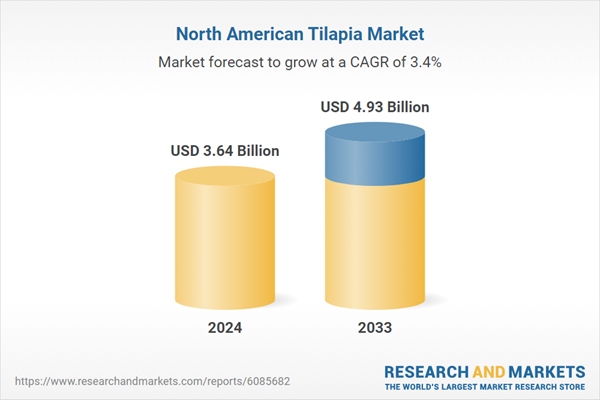
The North America Tilapia Market is expected to reach US$ 4.93 billion by 2033 from US$ 3.64 billion in 2024, with a CAGR of 3.43% from 2025 to 2033. Growing demand for sustainable, affordable protein, health-oriented consumer behavior, improved aquaculture technology, an increase in Asian and Latin American imports, and government support for sustainable fisheries and aquaculture practices are some of the reasons behind the expansion of the North American tilapia market.
Growth Drivers for the North America Tilapia Market
Increased Demand for Affordable Protein
The tilapia market in North America is growing largely because of the higher demand for moderately priced protein. The mild taste and low fat protein of tilapia have gained popularity as an affordable alternative for pricier meats such as beef, chicken, and fish such as salmon because consumers become more health-aware and cost-aware. It is a cost-effective source of protein because it has high growth rates and relatively low production expenses. This value, which doesn't significantly increase the cost of food, complements the emerging trend of eating better, more sustainable food. As a result, tilapia is increasingly becoming popular in North America because it is incorporated into a range of diets, from everyday customers to those looking for affordable, natural choices.
Advancements in Aquaculture Technology
The North American tilapia sector is growing considerably as a result of increased production efficiency, sustainability, and profitability through advances in aquaculture technology. Productivity on farms is being enhanced by technologies such as genetic developments, including the development of tilapia strains that are faster-growing and disease-resistant. Healthy fish and reduced waste are ensured by intelligent aquaculture systems that employ IoT sensors and machine learning for real-time monitoring of water quality, feeding, and early disease detection. Through improved feed efficiency and converting waste to more protein, Biofloc technology further encourages sustainability. In addition, Recirculating Aquaculture Systems (RAS) enable environmental regulation and reuse of water, reducing water use and encouraging year-round production. These advances collectively contribute to increasing the sustainability and efficiency of tilapia production, which drives market growth in turn.
Rising Awareness of Sustainability
The North American tilapia market is growing rapidly as a result of increased awareness of sustainability. Consumers are opting for sustainably sourced seafood because they are increasingly interested in the ethical and environmental impact of the food they consume. Tilapia is also considered an eco-friendly option due to its efficient feed conversion and minimal feed intake of wild fish, particularly when produced in controlled, recirculating systems. The Aquaculture Stewardship Council (ASC) and other organizations' certifications ensure consumers of ethical farming practices. An increasing appetite for transparency and eco-responsibility in seafood manufacturing is evidenced by research indicating a large majority of American consumers would be willing to pay extra for seafood that can be guaranteed to be properly and sustainably obtained.
Challenges in the North America Tilapia Market
Price Sensitivity
In the tilapia market in North America, price sensitivity is a major problem. Tilapia is frequently seen as a reasonably priced protein source, but price competitiveness may be impacted by changes in feed prices, production costs, and shipping charges. Price increases, even small ones, might cause demand to shift toward other meat or fish options as consumers look for cheaper alternatives. Additionally, producers may feel pressured to maintain profitability while maintaining competitive prices as a result of this price volatility, leaving the market susceptible to changes in the economy and cost hikes.
Supply Chain Disruptions
Due to its heavy reliance on imports from nations like China, Ecuador, and Honduras, the North American tilapia market faces significant challenges from supply chain interruptions. Any disruptions, whether brought on by pandemics, natural disasters, or geopolitical unrest, may result in supply delays that impact availability and raise prices. The stability and long-term growth potential of the market may be impacted by these disruptions, which may lead to shortages, price increases, and less consumer access to tilapia.
Key Attributes
| Report Attribute | Details |
| No. of Pages | 200 |
| Forecast Period | 2024-2033 |
| Estimated Market Value (USD) in 2024 | $3.64 Billion |
| Forecasted Market Value (USD) by 2033 | $4.93 Billion |
| Compound Annual Growth Rate | 3.4% |
| Regions Covered | North America |
Key Topics Covered
1. Introduction
2. Research & Methodology
3. Executive Summary
4. Market Dynamics
4.1 Growth Drivers
4.2 Challenges
5. North America Tilapia Market
5.1 Historical Market Trends
5.2 Market Forecast
6. North America Tilapia Market Share Analysis
6.1 By Species
6.2 By Product
6.3 By Countries
7. Species
7.1 Nile Tilapia
7.2 Tilapias Nie
7.3 Others
8. Product
8.1 Frozen Whole Tilapia
8.2 Fresh Fillet Tilapia
8.3 Frozen Fillet Tilapia
9. Countries
9.1 Canada
9.2 United States
9.3 Mexico
9.4 Rest of North America
10. Porter's Five Forces Analysis
10.1 Bargaining Power of Buyers
10.2 Bargaining Power of Suppliers
10.3 Degree of Rivalry
10.4 Threat of New Entrants
10.5 Threat of Substitutes
11. SWOT Analysis
11.1 Strength
11.2 Weakness
11.3 Opportunity
11.4 Threat
12. Key Players Analysis
- High Liner Foods Inc.
- Mowi ASA
- NH Foods Ltd.
- Beaver Street Fisheries
- Cooke Inc.
- FCF Co. Ltd.
- Pacific American Fish Company Inc.
- Regal Springs
For more information about this report visit https://www.researchandmarkets.com/r/twnkhz
About ResearchAndMarkets.com
ResearchAndMarkets.com is the world's leading source for international market research reports and market data. We provide you with the latest data on international and regional markets, key industries, the top companies, new products and the latest trends.
Attachment
