--  Real Time Lighting and Dynamic Soft Shadows: CryENGINE™ 2 features
    natural looking light sources, and creates soft shadows that dynamically
    respond to natural movements. It includes high-resolution, perspective
    correct and volumetric smooth-shadow implementations.

--  Volumetric, Layer and View Distance Fogging: Create clouds or fog
    banks which can hug the ground and realistically reduce both visibility and
    contrast, and properly interact with both dynamic lights and shadows, add
    depth and dimension to a landscape by reducing scene contrast and clarity
    for distant landmarks.

--  Terrain 2.5D Ambient Occlusion Maps: On a per pixel level,
    approximates the amount of ambient (fill) light reaching an object (static
    or dynamic) depending on the amount of ambient occlusion created by the
    surrounding foliage and structures.

--  Normal Maps and Parallax Occlusion Maps: Normal maps are used to
    project the contour details of a highly detailed object onto a low polygon
    model by using a high frequency compressed (3DC/BC5) texture in place of
    the polygon's surface normal in lighting calculations. CryENGINE 2 also
    supports parallax occlusion mapping to give a greater sense of depth to a
    surface texture applied to a polygon, such as could be used to
    realistically emphasize the relief surface structure of a brick wall, for
    example.

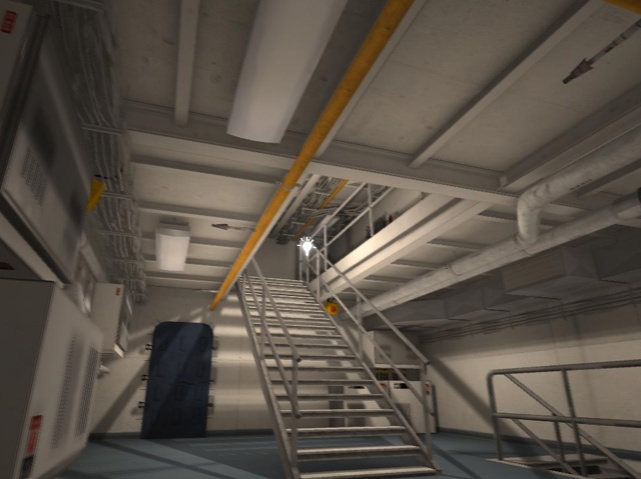
--  Real Time Ambient Maps: Pre-calculate the amount of ambient (fill)
    light which will be applied to indoor surfaces, to improve the quality of
    lighting when applying real-time per-pixel lighting and shadows. This means
    the current light position and color can be dynamically added to the fill
    light intensity applied to illuminate surfaces in interior spaces.

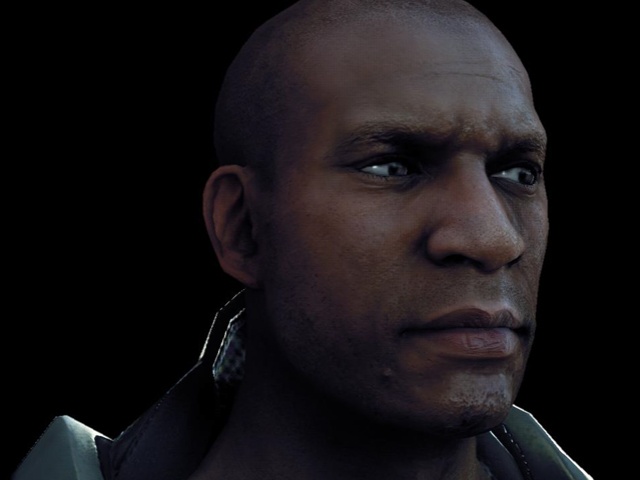
--  Subsurface Scattering: Simulates the diffusion and diffraction of
    light transmitted through translucent objects, like ice and jade; it can
    also be used to create natural looking skin or vegetation.

--  Eye Adaptation & High Dynamic Range (HDR) Lighting: Eye Adaptation is
    used to simulate the human eye's adaptation to sudden or extreme changes in
    lighting conditions, like dark indoor environments suddenly transitioning
    to bright sunny outdoor environments, while HDR allows scenes with extreme
    brightness and contrast ranges to be more realistically rendered.

--  Motion Blur & Depth of Field: Motion Blur is used to simulate the
    visual effect of using a slow shutter speed when tracking fast moving
    objects or making quick camera movements. Blur can be applied both to
    individual objects (object based motion blur), and/or to an entire scene
    (screen based motion blur), while Depth of Field can be used to focus the
    viewer's eye on a nearby object while subtly blurring objects in front or
    behind the point of focus.

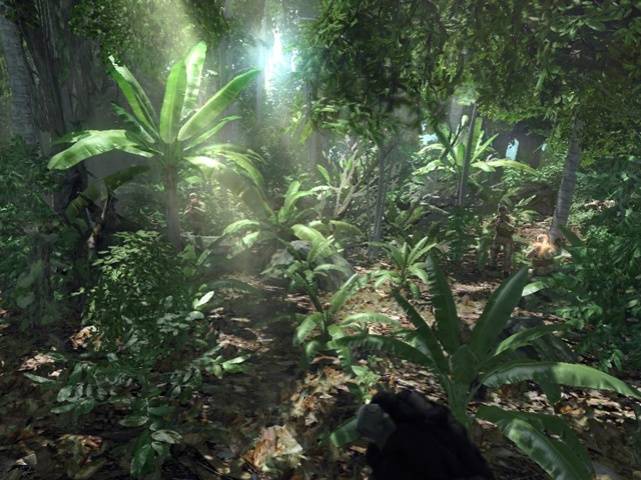
--  Light Beams & Shafts: These are used to create visually stunning light
    beams and shadows when light intersects with solid or highly detailed
    geometry, and can generate "godray" effects under water.

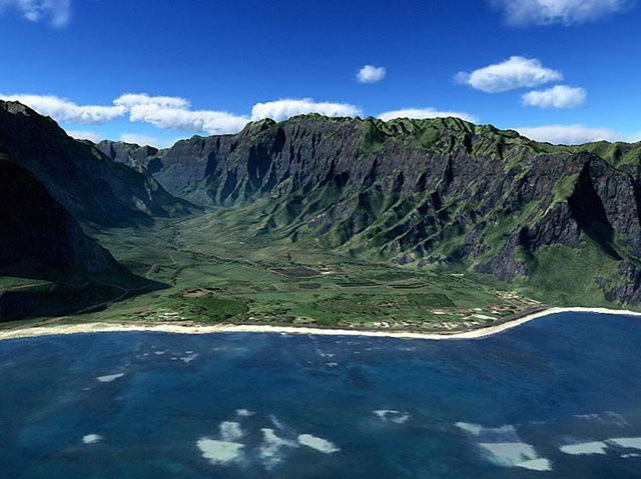
--  High Quality 3D Ocean Technology: Dynamically modifies the ocean
    surface based on wind and wave direction, generating shoreline soft-
    clipping breakers automatically where the ocean meets the shore, depending
    on the shoreline contour and ocean depth, while our caustic simulation
    creates realistic looking moving shadows and highlights in underwater
    environments.

--  Advanced Shader Technology: A script system used to combine textures
    and math in different ways to create unique effects such as cloaked, wet,
    muddy, and/or frozen surfaces which can be layered together and combined
    with more basic shaders such as metallic and glassy and other visual
    effects. Supports real time per-pixel lighting, bumpy reflections,
    refractions, volumetric glow effects, animated textures, transparent
    computer displays, windows, bullet holes, and shiny surfaces. Included are
    many unique new shaders which take advantage of the efficiencies of the
    unified shader architecture of DirectX 10.

--  Terrain LOD Management Feature: This feature allows optimal usage of
    CPU and memory to display closer objects and terrain at a fine level of
    detail while enabling long view distances of over 8 kilometers.

--  Integrated Multi-threaded Physics Engine: Can be applied to almost
    everything in a level, including trees and vegetation, to realistically
    model reactions to forces like wind currents, explosions, gravity, friction
    and collisions with other objects, without the need of specialized
    coprocessing hardware. Also allows for character to ragdoll and ragdoll to
    character transitions.

--  Character Individualization System: The character pipeline uses a
    robust character attachment system which allows for attachment of skinned,
    animated, or physicallized attachments to the skeleton or polygonal faces
    of a character, to the extent you can even replace entire body parts such
    as heads, hands, or upper and lower body. A hardware based shape
    deformation system allows flexible variation of the character meshes. The
    system supports manually and even procedurally generated examples to ensure
    a small memory footprint. An additional variation system based on shaders
    is used for dirt, decals for clothes, and camouflage shaders for the skin.

--  Parametric Skeletal Animation: By blending example-motions based on
    user-defined parameters, we obtain responsive interactive control over a
    character with a focus on believability and the ability to adapt
    automatically and naturally to the changing circumstances of a game
    environment. This enables the character to travel at different speeds,
    follow paths where the direction changes smoothly or suddenly, move uphill
    or downhill, dynamically blend in varying amounts of hit reaction
    animation, and/or change the style of locomotion.

--  Procedural Motion Warping: Procedural algorithms like CCD-IK, analytic
    IK, example-based IK or physical simulations are used to augment pre-
    authored animations. All procedural methods have in common that a computer
    procedurally follows the steps in an algorithm to generate artificial
    motions. To avoid the typical computer-generated look when combining
    artificial and captured animations, we use a warping technique that can
    preserve the style and the content of the base motion, despite the
    transformations needed to comply with the constraints.

--  High Quality Animation Compression: Using our adaptive key frame
    compression technology, we can adjust the compression level to match the
    fidelity needed for any given animation while saving at least 90% of the
    RAM that would otherwise be consumed, without significant loss of motion
    fidelity.

--  In Game Mixing: Integrated editor functionality and advanced sound
    specification tools provide efficient mixing by connecting to a running
    game instance on various target platforms. This constantly guarantees a
    well mixed game in every development stage by allowing review of the
    results in either the game itself, or in other editor modes, such as sounds
    triggered by animations from within the character editor, for example.

--  Data-driven Sound System: Complex sounds can be easily created and
    delivered with studio quality while supporting any available surround sound
    speaker configuration. Multi-platform compatibility is guaranteed by FMOD's
    included sound library.

--  Interactive Dynamic Music System: Improved playback of music tracks by
    specially defined logic that reacts to any desired game event in order to
    give the player a movie-like sound track experience.

--  Environmental Audio: This feature allows a sound designer to achieve a
    dense sound impression by accurately reproducing sounds from nature, with
    seamless blending between different environments, for example the effect of
    moving from an interior to an exterior location.

--  Dynamic World Sounds: Any physical contact can spawn a unique sound
    controlled by various parameters such as material type, object type, mass,
    and speed. This technique provides non-repetitive and responsive audio
    feedback to movement in an interactive game world.
More features are presented at:
http://www.crytek.com/technology/index.php?sx=eng2
CryENGINE 2® video demo
A video showing CryENGINE 2 in action is available here:
ftp://ftp1.entropiauniverse.com/movies/cryengine2.wmv (150 mb)
About Entropia Universe
The heart of Entropia Universe is a distant planet named Calypso, which
encompasses two continents with animal-filled wildernesses and large
expanding cities that offer a variety of entertainment and social
interaction for its participants. In Entropia, participants can create
their own persona, or avatar, via a character-generation system, and then
have the option of choosing a suitable life and virtual existence for their
avatar. Characters are able to enter the evolving worlds of Entropia
Universe, which are full of unexplored and uncultivated lands. Participants
can join a community or even create a civilization of their own. Entropia
offers a new avenue for individuals to pursue dreams, fantasies, and
adventures in an astoundingly 'real' virtual universe.
Entropia Universe offers opportunities in numerous professions which are
unique and completely different from that of the members' real life
occupation. Entropia uses a system based on skills and experience which
allows for occupational proficiency in areas ranging from event promotions
and store ownership to hunting and mining. Entropians have the chance to
buy and sell property, become financially successful, and even find a mate
in their virtual world.
Entropia Universe is the only virtual gaming community in the world that
actively supports sales of virtual products with actual cash value within
its real economy system. The economy offers the user a secure and safe way
to make purchases, sales and exchange real-life currency into PED (Project
Entropia Dollars) and back again into real money, at a fixed exchange rate
to the US Dollar, guaranteed by MindArk PE AB. PED allows members to invest
in personal development and growth through the acquisition of goods,
buildings, and land in the virtual universe. In 2006, the Entropia Universe
turnover was a staggering $365,000,000.
In December 2004, Entropia Universe set a world record certified by the
Guinness Book of World Records, when it sold a virtual Treasure Island for
US $26,500, the largest virtual dollar amount spent, to 22-year-old
Australian David Storey, a.k.a. "Deathifier." In October 2005, the sale of
an asteroid-based space resort for US $100,000 to famed gamer, Jon
'NEVERDIE' Jacobs, set a new record for the most valuable virtual item. In
May 2007, MindArk sold five virtual banking licenses for over US $400,000
to a diverse group of buyers including real world banks and financial
establishments as well as Entropia participants. In June 2007, MindArk
announced a partnership with Chinese company CRD with plans to launch
Entropia Universe to the Chinese market in 2008, thus creating a
billion-dollar virtual environment.
About MindArk PE AB
MindArk PE AB began in April of 2003 in Sweden, and are pioneers in the
virtual world space. MindArk develops, supports and monitors the services
and maintenance of Entropia Universe® -- The Safest Virtual Universe with
a Real Cash Economy. Entropia Universe was launched in 2003 and has over
615,000 registered accounts. The company has been profitable since 2004.
MindArk offers the Entropia Universe software to users free of charge with
no monthly costs or associated subscription fees. For more information or
to download the free Entropia Universe software please visit
www.entropiauniverse.com. For more information about Entropia Universe's
developer, MindArk, please visit www.mindark.com.
About Crytek
Crytek GmbH ("Crytek") creators of the multiple award winning
next-generation first person shooter Far Cry®, and the upcoming
blockbuster hit Crysis®, is an interactive entertainment development
company with its headquarters located in Frankfurt Main, Germany and
additional studios in Kiev, Ukraine and Budapest, Hungary. Crytek is
dedicated to creating exceptionally high quality video games for the PC and
next-generation consoles, powered by their proprietary cutting edge
3D-Game-Technology CryENGINE 2®. For more information about Crytek,
please visit http://www.crytek.com. Developers who are interested in
obtaining a commercial license for the CryENGINE 2® middleware should
mail their enquiries to cryengine@crytek.com
Contact Information: MindArk Contact: Elina Heng Terpin Communications Group (310) 821-6100 x108 Crytek Contact: Harald Seeley Crytek +49 (0) 69 219 7766 69