Dublin, June 03, 2025 (GLOBE NEWSWIRE) -- The "Saudi Arabia Halal Food & Beverages Market by Region, Competition, Forecast & Opportunities, 2020-2030F" report has been added to ResearchAndMarkets.com's offering.
The Saudi Arabia Halal Food & Beverages Market was valued at USD 18.56 Billion in 2024 and is projected to reach USD 29.34 Billion by 2030, rising at a CAGR of 7.93%
The market is expanding steadily, supported by the Kingdom's predominantly Muslim population and strong demand for halal-certified food across multiple categories. Growing consumer interest in ethical sourcing, clean-label products, and health-conscious choices has reinforced the appeal of halal options.
Government backing through Vision 2030 has further encouraged industry development, with increased investment in halal exports and infrastructure. The influx of international brands and the expansion of e-commerce platforms have made a wider variety of halal-certified products more accessible to consumers, contributing to overall market growth. 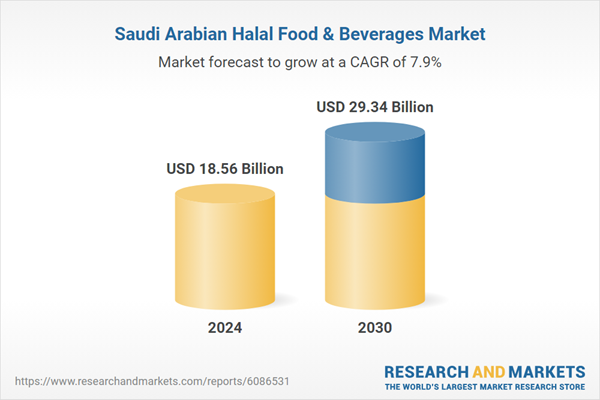
Rising Muslim Population Across the Region
The expanding Muslim population continues to be a key driver for the Saudi Arabia halal food and beverages market. As of 2025, approximately 93% of the Kingdom's population, equating to 34.37 million people, identify as Muslim. This demographic reality fuels consistent and high demand for halal-certified products in daily consumption. Saudi Arabia's religious and cultural position as the birthplace of Islam enhances trust in locally produced halal offerings, making them appealing not only domestically but also to the global Muslim market.
The country's robust halal certification standards reinforce this trust, providing consumers with assurance of religious compliance. Vision 2030 initiatives have further positioned Saudi Arabia to become a global exporter of halal products, supporting the market's continued growth and global relevance.
Supply Chain and Logistics Issues
The halal food and beverages market in Saudi Arabia faces logistical challenges tied to maintaining strict halal standards throughout the supply chain. Ensuring separation from non-halal items during transportation and storage is essential to prevent contamination. The need for specialized logistics, including halal-compliant warehousing and transportation, adds operational complexity and cost.
Managing the supply of certified halal ingredients from international sources further complicates logistics due to regulatory scrutiny and certification verification. As e-commerce continues to grow, delivering to remote or less urbanized areas remains a hurdle, impacting timely access and product availability. These inefficiencies can raise prices and limit market reach, making supply chain optimization a priority for sustainable growth.
Sustainability and Ethical Sourcing
Sustainability and ethical sourcing are emerging as critical trends in the Saudi halal food and beverages market. Increasing consumer awareness around environmental and ethical practices is driving demand for products made using responsible methods. This includes using biodegradable packaging, reducing food waste, and ensuring humane treatment of animals, which aligns with the ethical foundation of halal principles.
The Saudi government's Vision 2030 framework also emphasizes sustainable development across industries, including food production. Events like the Makkah Halal Forum 2025 have highlighted the need for innovation and cooperation to embed sustainability within halal supply chains. Companies aligning with these values are likely to gain consumer trust and enhance their competitive advantage in the evolving marketplace.
Key Attributes:
| Report Attribute | Details |
| No. of Pages | 82 |
| Forecast Period | 2024 - 2030 |
| Estimated Market Value (USD) in 2024 | $18.56 Billion |
| Forecasted Market Value (USD) by 2030 | $29.34 Billion |
| Compound Annual Growth Rate | 7.9% |
| Regions Covered | Saudi Arabia |
Report Scope:
Key Players Profiled in this Saudi Arabia Halal Food & Beverages Market Report
- Al Islami Foods
- Amana Foods
- Al Kabeer Frozen Foods
- Midamar Corporation
- Prairie Halal Foods
- JM FOODS llc
- Al Rawdah Farms
- Tanmiah Food Company
- ARASCO Food
- Almarai Company
Saudi Arabia Halal Food & Beverages Market, by Product Type:
- Bakery
- Candy & Chocolate
- Meat Products
- Beverages
Saudi Arabia Halal Food & Beverages Market, by Distribution Channel:
- Supermarket/Hypermarket
- Specialty Stores
- Online
- Others
Saudi Arabia Halal Food & Beverages Market, by Region:
- Eastern
- Western
- Northern & Central
- Southern
For more information about this report visit https://www.researchandmarkets.com/r/n4xz
About ResearchAndMarkets.com
ResearchAndMarkets.com is the world's leading source for international market research reports and market data. We provide you with the latest data on international and regional markets, key industries, the top companies, new products and the latest trends.
Attachment
