Dublin, Nov. 13, 2025 (GLOBE NEWSWIRE) -- The "Self-Monitoring Blood Glucose (Smbg) Devices Market Outlook 2025-2034: Market Share, and Growth Analysis" report has been added to ResearchAndMarkets.com's offering.
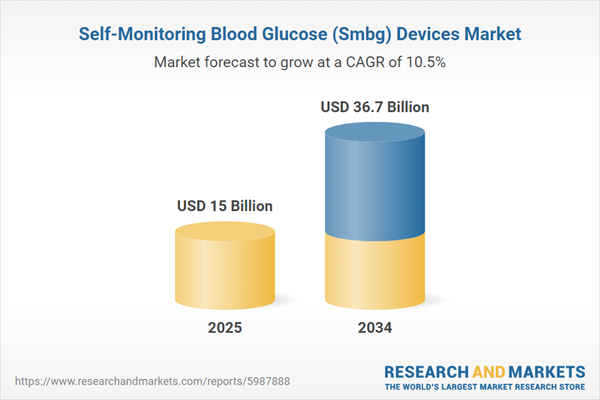
The Self-Monitoring Blood Glucose Devices Market is valued at USD 15 billion in 2025 and is projected to grow at a CAGR of 10.5% to reach USD 36.7 billion by 2034
The Self-Monitoring Blood Glucose (SMBG) devices market plays a pivotal role in diabetes management, enabling patients to regularly track their blood glucose levels and make informed decisions about diet, exercise, and medication. These devices, including glucose meters, test strips, and lancets, empower patients with real-time insights and have become essential for insulin-dependent diabetics.
The global increase in diabetes prevalence, driven by aging populations, sedentary lifestyles, and rising obesity rates, is a major catalyst for the expansion of this market. SMBG devices are particularly valued for their portability, ease of use, and rapid result generation. With the growing emphasis on personalized healthcare and the need for tighter glycemic control, both patients and healthcare providers are increasingly turning to these tools to avoid complications and improve outcomes. The market is highly competitive, with manufacturers investing in features such as Bluetooth connectivity, memory storage, and data-sharing capabilities to differentiate their products.
The SMBG devices market witnessed notable innovation and increased global uptake, particularly in emerging economies where diabetes is rising rapidly. New product launches emphasized user-friendly designs, smaller blood sample requirements, and faster response times. Smartphone integration and mobile apps continued to gain popularity, allowing users to track trends, receive alerts, and share data with healthcare providers.
In response to growing consumer demand for greater control and convenience, companies developed compact, all-in-one kits combining meters, test strips, and lancing devices. Subsidized access to glucose meters and test strips through government initiatives and insurance coverage expanded usage in underserved regions.
Meanwhile, partnerships between digital health firms and device manufacturers fostered new platforms for remote diabetes management. Regulatory approvals for over-the-counter sales and increased retail availability made SMBG devices more accessible to newly diagnosed patients. The competitive landscape also saw market entry by regional players offering cost-effective alternatives to established brands.
The SMBG devices market is expected to evolve toward more integrated, intelligent solutions that combine monitoring with predictive analytics and real-time coaching. AI-powered platforms will begin analyzing glucose data patterns to forecast highs and lows, guiding patients with tailored recommendations.
As consumers demand more seamless, connected experiences, device manufacturers will prioritize interoperability with insulin pumps, fitness trackers, and other digital health tools. Efforts to reduce pain and discomfort in testing will lead to further miniaturization of lancets and non-invasive glucose monitoring alternatives. In developing regions, market penetration will continue to rise due to enhanced awareness campaigns, urbanization, and the growing availability of telehealth services.
Additionally, new entrants offering subscription-based SMBG models may disrupt traditional pricing and distribution methods. Global health policy will likely play a larger role, with initiatives targeting early diagnosis, education, and home-based care. The future of SMBG will be driven by a blend of technological sophistication, affordability, and user empowerment.
Key Insights: Self-Monitoring Blood Glucose (Smbg) Devices Market
- Integration of SMBG devices with mobile apps and cloud platforms is enabling real-time data tracking, analysis, and sharing, helping users and clinicians make timely and informed decisions.
- All-in-one glucose monitoring kits are gaining traction for their portability and convenience, especially among users managing diabetes during travel or busy daily routines.
- Wearable-compatible SMBG systems and Bluetooth-enabled meters are enhancing user experience by syncing data with fitness trackers and digital health records for more holistic care.
- Manufacturers are focusing on reducing blood sample volume and improving test speed to make SMBG devices less invasive and more appealing for frequent monitoring.
- Emerging non-invasive glucose monitoring technologies are drawing attention as a future alternative, though they are still in early stages of development and approval.
- The rising global prevalence of diabetes, especially in low- and middle-income countries, is driving sustained demand for accessible and easy-to-use self-monitoring solutions.
- Increasing awareness of diabetes complications and the benefits of tight glycemic control is encouraging both patients and healthcare providers to adopt SMBG as part of daily care routines.
- Technological advancements such as app integration, Bluetooth connectivity, and data analytics are enhancing the functionality and attractiveness of modern SMBG devices.
- Supportive government policies, insurance reimbursement, and public health campaigns are expanding access to glucose monitoring tools across diverse population groups.
- Affordability and ongoing cost of test strips remain a major concern for patients, especially in developing regions, limiting consistent use of SMBG devices despite increasing availability and awareness.
Key Companies Analysed
- SES SA
- Arab Satellite Communications Organization
- Empresa Brasileira de Telecomunicacoes S.A.
- Eutelsat SA
- Hispasat SA
- Intelsat Corporation
- Telesat Corp.
- Thaicom Public Company Limited
- Singapore Telecommunication Limited
- ABS Global Ltd.
- Viasat Inc.
- Antrix Corporation Limited
- SKY Perfect JSAT Corporation
- EchoStar Corporation
- China Satellite Communications Co. Ltd.
- Russian Satellite Communications Company
- L3Harris Technologies Inc.
- Spacecom
- DataPath Inc.
- General Dynamics Mission Systems Inc.
- Honeywell International Inc.
- Iridium Communications Inc.
- Lockheed Martin Corporation
- Northrop Grumman Corporation
- Raytheon Technologies Corporation
- Space Exploration Technologies Corp.
- Thales Group
- The Boeing Company
- Inmarsat Global Ltd.
- Telenor Satellite AS
- Al Yah Satellite Communications
Self-Monitoring Blood Glucose (Smbg) Devices Market Segmentation
By Product
- Self-Monitoring Blood Glucose Meters
- Continuous Glucose Monitors
- Testing Strips
- Lancets
By Distribution Channel
- Hospital Pharmacies
- Retail Pharmacies
- Online Sales
- Diabetes Clinics & Centers
By Application
- Type 1 Diabetes
- Type 2 Diabetes
- Gestational Diabetes
For more information about this report visit https://www.researchandmarkets.com/r/mvwpni
About ResearchAndMarkets.com
ResearchAndMarkets.com is the world's leading source for international market research reports and market data. We provide you with the latest data on international and regional markets, key industries, the top companies, new products and the latest trends.
Attachment
