Dublin, Nov. 28, 2025 (GLOBE NEWSWIRE) -- The "North America Wearable Technology Market Report by Product, Application, Country and Company Analysis, 2025-2033" report has been added to ResearchAndMarkets.com's offering.
The North America Wearable Technology Market is expected to reach US$ 80.38 billion by 2033 from US$ 31.15 billion in 2024, with a CAGR of 11.11% from 2025 to 2033.
The market for wearable technology in North America is anticipated to expand gradually due to improvements in smart device technology, growing consumer usage in fitness, healthcare, and lifestyle applications, and increased health consciousness. The North American wearable technology market is led by the United States, supported by Canada's expanding innovation ecosystem, with both regions benefiting from strong digital infrastructure, health-conscious consumers, and rising integration across connected ecosystems.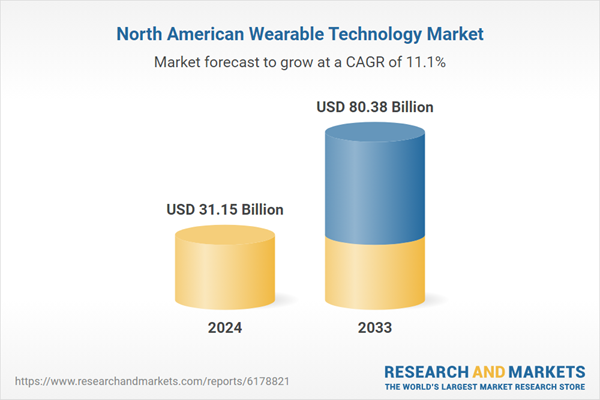
The North America wearable technology industry is witnessing significant expansion, supported by rising demand for connected devices and digital health solutions. Wearable technology integrates electronics into everyday accessories, enabling continuous data monitoring and user interaction. Smartwatches, fitness trackers, smart glasses, and healthcare wearables are gaining popularity across diverse consumer segments. The growing emphasis on preventive healthcare and wellness tracking has accelerated adoption, with consumers increasingly seeking real-time insights into physical activity, sleep patterns, and vital signs. The region's strong technological infrastructure and high digital literacy further reinforce market growth. Additionally, integration with mobile applications and cloud platforms enhances the user experience by providing personalized feedback and analytics.
Innovation continues to be a key differentiator within the North American wearable technology ecosystem. The convergence of artificial intelligence, Internet of Things (IoT), and advanced sensors is enabling more accurate and multifunctional devices. Wearables are evolving from fitness-focused products to comprehensive health management tools capable of detecting irregularities and supporting clinical decision-making. Partnerships between technology companies, healthcare providers, and insurers are promoting new business models, including remote monitoring and telehealth integration. Moreover, increasing investments in research and development are expanding application areas such as workplace safety, sports performance, and chronic disease management. This growing versatility underscores wearables' role in shaping personalized and connected lifestyles.
The market outlook remains positive, supported by consumer awareness, product innovation, and expanding use cases across industries. However, challenges such as data privacy, interoperability, and device reliability must be addressed to sustain growth. Continuous efforts toward user-friendly design, regulatory compliance, and ecosystem integration are helping manufacturers meet evolving expectations. As the line between consumer electronics and healthcare devices continues to blur, wearable technology is set to remain a critical component of North America's digital transformation. The combination of functionality, connectivity, and health insights positions this industry for continued advancement and widespread adoption in the years ahead.
Key Factors Driving the North America Wearable Technology Market Growth
Rising Health Awareness and Fitness Tracking Adoption
Increasing awareness of health and fitness is a major factor driving wearable technology adoption in North America. Consumers are increasingly relying on smartwatches and fitness bands to monitor heart rate, calories, sleep patterns, and activity levels. The shift toward proactive health management, coupled with growing concerns about lifestyle-related conditions, has fueled demand for digital wellness tools. Corporate wellness programs and insurance incentives further encourage the use of wearables for continuous monitoring and risk prevention.
Enhanced integration with health platforms and mobile applications enables users to track progress and set personalized goals. The convenience of accessing real-time health data fosters user engagement and accountability. As consumers seek greater control over their well-being, wearables continue to gain traction across demographics, reinforcing their importance as everyday companions in the pursuit of healthier lifestyles.
Technological Advancements and Smart Device Integration
Technological innovation and device integration are key growth enablers for the North America wearable technology market. Advancements in sensors, wireless communication, and battery efficiency have enhanced device accuracy and usability. The integration of artificial intelligence and IoT capabilities allows wearables to analyze complex data and deliver personalized insights. Compatibility with smartphones, home automation systems, and healthcare platforms improves connectivity and user experience. Voice assistants, gesture controls, and biometric authentication features are making devices more intuitive and multifunctional.
Furthermore, miniaturization and design improvements are driving adoption among style-conscious consumers. Continuous upgrades and cross-platform synchronization ensure seamless data sharing, making wearables indispensable across both personal and professional environments. These technological improvements not only enhance device functionality but also open opportunities in sectors like telemedicine, fitness training, and occupational safety, strengthening the market's growth trajectory.
Expansion of Healthcare and Remote Monitoring Applications
The growing integration of wearable technology into healthcare and remote monitoring systems is driving market expansion in North America. Wearable medical devices enable continuous tracking of vital signs, facilitating early detection and management of chronic conditions. Healthcare providers are increasingly adopting wearables for patient monitoring, telemedicine, and rehabilitation support. The ability to transmit real-time data to clinicians enhances diagnostic accuracy and treatment efficiency.
Moreover, aging populations and the rise in home-based care models have amplified demand for connected health devices. Partnerships between technology firms and healthcare organizations are fostering the development of regulatory-compliant wearables for clinical use. This shift toward digital health ecosystems is improving accessibility, reducing hospital visits, and empowering patients to actively participate in their care. The fusion of technology and medicine is thus reshaping healthcare delivery and driving sustained growth in the wearable technology sector.
Challenges in the North America Wearable Technology Market
Data Privacy and Security Concerns
Data privacy and security represent major challenges in the North America wearable technology market. Wearable devices continuously collect sensitive user information, including biometric, location, and health data, making them potential targets for cyberattacks. Inadequate encryption, data breaches, or unauthorized sharing can erode consumer trust and hinder adoption. As regulations surrounding data protection evolve, manufacturers must ensure compliance with privacy standards while maintaining seamless functionality.
Transparency in data collection and consent processes is critical for user confidence. Additionally, interoperability between platforms often introduces vulnerabilities that require robust cybersecurity measures. Addressing these concerns demands collaboration between technology developers, regulators, and service providers. Building secure architectures and implementing real-time threat monitoring systems are essential to safeguarding user information. Ensuring privacy protection will be key to maintaining credibility and supporting continued growth in North America's wearable technology ecosystem.
High Costs and Limited Battery Performance
High device costs and limited battery performance continue to challenge the North America wearable technology market. Advanced features such as high-resolution displays, continuous monitoring sensors, and connectivity options increase manufacturing expenses. These costs often translate to premium pricing, restricting adoption among cost-sensitive consumers. Additionally, battery life remains a key concern as users demand extended operation without frequent charging.
Continuous data transmission and real-time analytics strain power efficiency, affecting usability for long-term wear. Manufacturers are focusing on improving energy optimization and exploring alternative power sources to enhance performance. However, balancing advanced functionality with affordability remains a challenge. Competitive pricing, modular designs, and battery innovations will be essential to achieving mass-market penetration. Addressing these issues will determine the pace of wearable technology adoption and influence its long-term sustainability across North American markets.
Key Attributes:
| Report Attribute | Details |
| No. of Pages | 200 |
| Forecast Period | 2024 - 2033 |
| Estimated Market Value (USD) in 2024 | $31.15 Billion |
| Forecasted Market Value (USD) by 2033 | $80.38 Billion |
| Compound Annual Growth Rate | 11.1% |
| Regions Covered | North America |
Company Analysis:
- Samsung Group
- Oculus VR LLC (Facebook)
- Alphabet Inc.
- Sony Corporation
- HTC Corporation
- Fitbit Inc.
- Xiaomi Inc.
- Apple Inc.
- Microsoft Corporation
- DAQRI Company
Market Segmentations
Product
- Wrist-Wear
- Eye-Wear & Head-Wear
- Foot-Wear
- Neck-Wear
- Body-Wear
- Others
Application
- Consumer Electronics
- Healthcare
- Enterprise & Industrial Application
- Others
Country
- United States
- Canada
For more information about this report visit https://www.researchandmarkets.com/r/g1n8ha
About ResearchAndMarkets.com
ResearchAndMarkets.com is the world's leading source for international market research reports and market data. We provide you with the latest data on international and regional markets, key industries, the top companies, new products and the latest trends.
Attachment
