Dublin, Dec. 30, 2025 (GLOBE NEWSWIRE) -- The "United States Candy Market Report by By Distribution Channel, States and Company Analysis, 2025-2033" has been added to ResearchAndMarkets.com's offering.
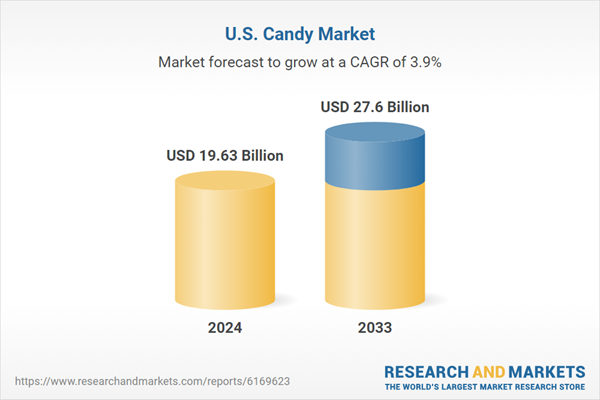
The United States Candy Industry will witness high growth, increasing from US$ 19.63 Billion in 2024 to US$ 27.60 Billion by 2033. The growth reflects a Compound Annual Growth Rate (CAGR) of 3.86% from 2025 to 2033. The driving factors for this growth are growing consumer demand for new-age candy products, growing disposable incomes, and shifting tastes towards indulgent food.
Strong Consumer Appeal of Indulgence and Snacking
The demand for candy in the United States is driven by its position as small indulgence and a cost-effective luxury. Chocolate is consumed by consumers across all age groups as a snack, reward, or stress reliever. For holidays like Halloween, Easter, and Valentine's Day, demand is further boosted to peak sales potential. Beyond holidays, day-to-day snacking culture also supports consistent consumption. Candy is popular because it comes in a wide range, is portable, and economical as opposed to other treats such as pastries or luxury desserts. There has been high demand in the market for products with chocolate, as 81% of the US market was in favor of chocolate in 2022, averaging 9.5 pounds per individual. Manufacturers are reacting to this demand by launching diversified product portfolios that meet different taste profiles and occasions of consumption.
Flavors, Packaging, and Format Innovation
The U.S. confectionery market rides on steady innovation in products. Firms are testing novel flavors such as exotic flavors, sugar substitutes, vitamins in functional candies, and eco-friendly packaging to appeal to various consumer bases. Innovative formats like bite packs, resealable pouches, and novel shapes optimize convenience and appeal. Premiumization is also on the rise, as artisan and ethically produced chocolates increase in popularity among health-conscious and socially responsible consumers. Variety focus guarantees consistent consumer interest. In May 2025, Perfetti Van Melle USA, Inc. revealed its newest gum variety, Trident Vibes Cotton Candy, to begin shipping to U.S. retailers following a successful 6-month exclusive introduction through a top U.S. mass retail chain.
Expanding Distribution Channels
The multiplicity of distribution channels for candy is a key growth factor. High access through convenience stores, supermarkets, vending machines, and e-commerce contributes significantly. Online platforms and direct-to-consumer models are especially critical when targeting young consumers who prioritize convenience and subscription services. The impulsive nature of candy purchasing is facilitated by placement of products at checkout stands and online offers. The expansion of channels of distribution guarantees consistent customer access and increasing sales volumes. In January 2024, HI-CHEW introduced a new direct-to-consumer e-commerce website where candy enthusiasts can buy their favorite HI-CHEW candies all in one stop. Brand enthusiasts can now effortlessly access a greater range of HI-CHEW products with just a single click.
Severe Competition and Price Sensitivity
The confectionery industry is intensely competitive, with multinational corporations, private labels, and specialty brands competing for customer attention. Consumer price sensitivity creates challenges for luxury brands, particularly in times of economic recession. The costs of marketing to make products stand out in a saturated market are high. Retailers put pressure on prices, lowering margins. In order to stay competitive, firms need to achieve a balance between value, innovation, and brand image.
Rising Health and Wellness Concerns
Rising awareness of health issues among American consumers is challenging the candy industry. A high sugar diet has been associated with obesity, diabetes, and tooth decay, prompting many to cut down on sweet foods. Pressure from regulatory forces and consumer attitudes are compelling manufacturers to redesign products with low sugar, natural sweeteners, or functional ingredients. Innovation presents opportunities, but conforming to health-oriented trends increases complexity and production costs.
Key Attributes
| Report Attribute | Details |
| No. of Pages | 200 |
| Forecast Period | 2024-2033 |
| Estimated Market Value (USD) in 2024 | $19.63 Billion |
| Forecasted Market Value (USD) by 2033 | $27.6 Billion |
| Compound Annual Growth Rate | 3.8% |
| Regions Covered | United States |
Key Topics Covered
1. Introduction
2. Research & Methodology
3. Executive Summary
4. Market Dynamics
4.1 Growth Drivers
4.2 Challenges
5. United States Candy Market
5.1 Historical Market Trends
5.2 Market Forecast
6. Market Share Analysis
6.1 By Type
6.2 By Distribution Channel
6.3 By States
7. Type
7.1 Chocolate Candy
7.2 Non-chocolate Candy
7.3 Hard Boiled Candies
7.4 Pastilles, Gums, Jellies, and Chews
7.5 Toffees, Caramels, and Nougat
7.6 Mints
7.7 Other Non-chocolate Candies
8. Distribution Channel
8.1 Supermarkets/Hypermarkets
8.2 Convenience Stores
8.3 Specialist Retailers
8.4 Online Retail
8.5 Other
9. Top States
9.1 California
9.2 Texas
9.3 New York
9.4 Florida
9.5 Illinois
9.6 Pennsylvania
9.7 Ohio
9.8 Georgia
9.9 New Jersey
9.10 Washington
9.11 North Carolina
9.12 Massachusetts
9.13 Virginia
9.14 Michigan
9.15 Maryland
9.16 Colorado
9.17 Tennessee
9.18 Indiana
9.19 Arizona
9.20 Minnesota
9.21 Wisconsin
9.22 Missouri
9.23 Connecticut
9.24 South Carolina
9.25 Oregon
9.26 Louisiana
9.27 Alabama
9.28 Kentucky
9.29 Rest of United States
10. Value Chain Analysis
11. Porter's Five Forces Analysis
11.1 Bargaining Power of Buyers
11.2 Bargaining Power of Suppliers
11.3 Degree of Competition
11.4 Threat of New Entrants
11.5 Threat of Substitutes
12. SWOT Analysis
12.1 Strength
12.2 Weakness
12.3 Opportunity
12.4 Threats
13. Pricing Benchmark Analysis
14. Key Players Analysis
14.1 Perfetti Van Melle Group BV
14.2 The Topps Company Inc.
14.3 Mondelez International Inc.
14.4 Haribo GmbH & Co. KG
14.5 Mars Incorporated
14.6 Ferrero Group
14.7 Nestle SA
14.8 The Hershey Company
14.9 Grupo Arcor
14.10 Cloetta Ab
For more information about this report visit https://www.researchandmarkets.com/r/ot6rh2
About ResearchAndMarkets.com
ResearchAndMarkets.com is the world's leading source for international market research reports and market data. We provide you with the latest data on international and regional markets, key industries, the top companies, new products and the latest trends.
Attachment
