Dublin, Jan. 05, 2026 (GLOBE NEWSWIRE) -- The "Sex Reassignment Surgery Market Report by Surgery Type, Surgical Procedure, End User, Countries and Company Analysis, 2025-2033" has been added to ResearchAndMarkets.com's offering.
The Worldwide Sex Reassignment Surgery Market is anticipated to expand from US$ 2.93 Billion in 2024 to US$ 7.51 Billion in 2033. This growth is indicative of growing acceptance and gender-affirming procedure demand, fueled by growing awareness of transgender health concerns. The market is anticipated to register a Compound Annual Growth Rate of 11.02% from 2025 to 2033, marking the profound improvement in surgery methods and patient experience.
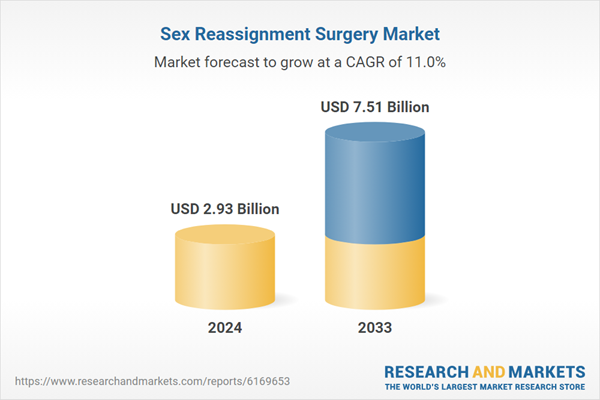
Growth Drivers in the Sex Reassignment Surgery Market
Increased Awareness and Social Acceptance
Increased social acceptance of transgender people and greater knowledge regarding gender dysphoria are key drivers of growth for the sex reassignment surgery (SRS) market. Organizing by LGBTQ+ groups, awareness campaigns, and healthy portrayal through the media have decreased stigma and motivated people to seek gender-affirming care. Governments in some nations are also accepting transgender rights, thus forming a supportive environment. With the advance of cultural and legal paradigms, greater numbers of individuals feel empowered to pursue medical treatments that confirm their gender identity with their physical selves, driving greater demand for highly specialized surgical treatments globally. May 2024: U.S. Department of Health & Human Services completed Section 1557 rules banning categorical exclusions of gender-transition surgeries.
Advances in Medical Techniques and Technology
Constant improvements in surgery methods and medical equipment have made sex reassignment surgeries safer, more accurate, and with better outcomes. Advanced reconstructive techniques, robotic surgeries, and microsurgical innovations provide better aesthetic and functional outcomes, enhancing patient confidence. Improved recovery pathways and post-operative care are decreasing complications and recovery durations. In addition, digital health technology integration through telemedicine sessions and AI-based diagnostic planning has optimized pre- and post-surgery care. These enhancements combined make SRS more convenient, efficient, and desirable for patients, thus fueling consistent market growth across various geographies and healthcare systems. On January 2024, Medtronic plc made the acquisition of Ethicon, a surgical sutures and wound closure devices business unit of Johnson & Johnson. The acquisition is intended to expand Medtronic's gender reassignment surgery product offerings and extend its market penetration.
Expanding Insurance Coverage and Healthcare Support
In the past, financial barriers limited access to SRS. But with the increasing recognition of SRS as a medically necessary treatment, patients are increasingly being covered by insurance, especially in developed countries. European countries' public healthcare systems and American private insurers are starting to cover gender-affirming surgeries, alleviating financial burdens on patients. Nonprofit agencies are also offering funding assistance to transgender individuals. This change in financial accessibility means more candidates can access surgery. As policies in healthcare move further towards inclusivity, greater affordability and access will propel high growth of the global SRS market. January 2025: Fagron bought CareFirst Specialty Pharmacy for EUR 30 million, increasing hormone-therapy compounding capacity.
Challenges in the Sex Reassignment Surgery Market
High Cost of Procedures
The expensive nature of sex reassignment procedures continues to be among the largest hurdles to market expansion. Depending on the procedure, costs can vary from tens of thousands of dollars to in excess of a hundred thousand dollars, particularly for genital procedures. In areas where insurance is limited or unavailable, transgender people are often unable to afford the therapy. This economic hindrance compels patients to either postpone surgery, fly overseas for cheaper alternatives, or forego medical transition altogether. The absence of standardized global reimbursement rules results in glaring inequalities of access, retardating market growth in low- and middle-income markets.
Shortage of Qualified Surgeons and Facilities
Although demand increases, there continues to be a shortage of highly trained surgeons and specialized units qualified to conduct sex reassignment surgeries. These operations are extremely complicated, involving microsurgery, urology, gynecology, and reconstructive surgery expertise. There is limited training available and long learning curves as well, which further limit the pool of eligible experts. Long waiting lists, especially in public facilities, or traveling abroad to receive treatment are imposed on most patients. This shortage not only impinges on accessibility but also enhances patients going to unregulated clinics, resulting in possible health issues and uneven market growth by geographies.
Key Attributes
| Report Attribute | Details |
| No. of Pages | 200 |
| Forecast Period | 2024-2033 |
| Estimated Market Value (USD) in 2024 | $2.93 Billion |
| Forecasted Market Value (USD) by 2033 | $7.51 Billion |
| Compound Annual Growth Rate | 11% |
| Regions Covered | Global |
Key Topics Covered
1. Introduction
2. Research & Methodology
3. Executive Summary
4. Market Dynamics
4.1 Growth Drivers
4.2 Challenges
5. Global Sex Reassignment Surgery Market
5.1 Historical Market Trends
5.2 Market Forecast
6. Market Share Analysis
6.1 By Surgery Type
6.2 By Surgical Procedure
6.3 By End User
6.4 By Countries
7. Surgery Type
7.1 Male-to-Female
7.2 Female-to-Male
8. Surgical Procedure
8.1 Augmentation Mammoplasty
8.2 Genital Surgery
8.3 Facial Feminisation Surgery
8.4 Facial Masculinisation Surgery
8.5 Voice & Airway Surgery
8.6 Body Contouring & Adjunct Procedures
8.7 Others
9. End User
9.1 Hospitals
9.2 Specialty Clinics
9.3 Ambulatory Surgery Centres
9.4 Others
10. Countries
10.1 North America
10.2 Europe
10.3 Asia Pacific
10.4 Latin America
10.5 Middle East & Africa
11. Value Chain Analysis
12. Porter's Five Forces Analysis
12.1 Bargaining Power of Buyers
12.2 Bargaining Power of Suppliers
12.3 Degree of Competition
12.4 Threat of New Entrants
12.5 Threat of Substitutes
13. SWOT Analysis
13.1 Strength
13.2 Weakness
13.3 Opportunity
13.4 Threats
14. Pricing Benchmark Analysis
15. Key Players Analysis
15.1 Mount Sinai Health System
15.2 Boston Medical Center
15.3 Rumer Cosmetic Surgery
15.4 The London Transgender Clinic
15.5 Phuket Plastic Surgery Institute
15.6 Gender Surgery Amsterdam (Netherlands)
15.7 UCSF Transgender Care
15.8 Transgender Surgery Institute of America
15.9 Center for Gender Confirmation Serbia
15.10 Papillon Gender Clinic (UK)
For more information about this report visit https://www.researchandmarkets.com/r/eec9gm
About ResearchAndMarkets.com
ResearchAndMarkets.com is the world's leading source for international market research reports and market data. We provide you with the latest data on international and regional markets, key industries, the top companies, new products and the latest trends.
Attachment
