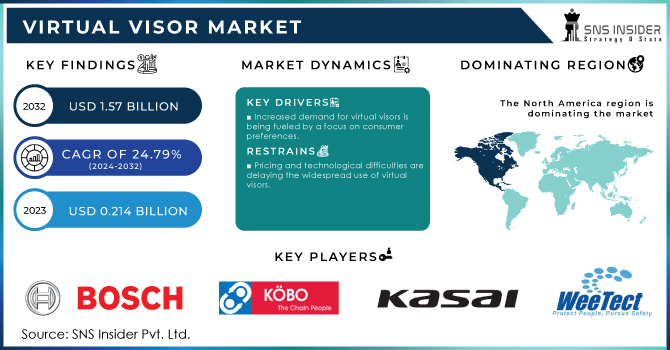
Austin, Aug. 06, 2024 (GLOBE NEWSWIRE) -- The Virtual Visor Market Size was valued at USD 0.214 billion in 2023 and is estimated to reach USD 1.57 billion by 2032 and grow at a CAGR of 24.79% over the forecast period 2024-2032.
Get a Sample Report of Virtual Visor Market @ https://www.snsinsider.com/sample-request/4210
Key Players
- ROBERT BOSCH GMBH
- ATLAS HOLDINGS
- KÖBO GmbH & Co. KG
- IRVINE AUTOMOTIVE PRODUCTS
- Kasai Kygo Co.ltd
- Mursion
- Sunvisors India Private Limited
- VISOR-AR
- Weetect
- Scope AR
The virtual visor industry is quickly growing due to progress in display and AI technology. Transparent LCDs and OLEDs allow for modifying opacity in real-time, enhancing glare reduction while maintaining visibility. AI algorithms improve visor effectiveness by analyzing live data to adjust to varying light conditions, enhancing driver comfort and safety. The increasing use of advanced driver assistance systems (ADAS) is speeding up the integration of virtual visors. By 2023, the number of vehicles equipped with global L2+ ADAS reached 630,000 units, with China taking the lead with a penetration rate of 5.7%. It is expected that this number will increase to 4.5 million by 2024, with a penetration rate of 5.5%, mainly due to the Chinese market.
The fast-growing automotive sector, especially the luxury and premium sections, plays a significant role in driving the virtual visor market. Customers in this industry are more and more looking for new characteristics that improve the safety and comfort of driving. The increase in worldwide vehicle manufacturing to 85 million units in 2023, supported largely by high-end luxury and premium categories, highlights this pattern. Buyers of luxury vehicles place a high emphasis on cutting-edge technologies. Virtual visors, which utilize AI and advanced displays for effective glare control, match their preferences perfectly. The expanding US new vehicle market is projected to hit 1.3 million units by May 2024, marking a 15.6% annual growth and strengthening the optimistic prospects for the automotive sector. With a record USD 46.9 billion being spent by consumers on new vehicles this May, the trend towards luxury vehicles is expected to drive the increased use of advanced features like virtual visors.
Virtual Visor Market Report Scope & Overview:
| Report Attributes | Details |
| Market Size in 2023 | USD 0.214 billion |
| Market Size in 2032 | USD 1.57 billion |
| CAGR (2024-2032) | 24.79% |
| Report Scope & Coverage | Market Size, Segments Analysis, Competitive Landscape, Regional Analysis, DROC & SWOT Analysis, Forecast Outlook |
| Market Driver |
|
Do you need any customization research on Virtual Visor Market, Speak to Our Analyst @ https://www.snsinsider.com/enquiry/4210
Segment Analysis
Based on Type, LED Type dominated the virtual Visor market with 61% of share in 2023. Increasing demand for virtual visors is being fueled by the expanding luxury and premium automobile industry. In 2023, luxury segments drove growth in global vehicle production, which reached 85 million units. These customers focus on high-tech features, matching the AI glare control of virtual visors. The positive outlook for virtual visors driven by the luxury segment is supported by the projected 1.3 million new vehicle sales in May 2024, a 15.6% year-on-year increase in the US market, and consumer spending of USD 46.9 billion in May.
Based on Application, Passenger Vehicle was the leading segment in the virtual visor market, accounting for 63% of the market share in 2023. Virtual visors improve driving safety and comfort through electronic sunlight control. These sophisticated visors can change opacity and position dynamically to lessen glare and eye strain. Contemporary cars frequently come with extra features such as real-time glare correction and personalized settings, meeting consumer demands for technologically advanced and comfortable vehicles.
Regional Analysis
North America dominated the virtual visor market with 40% of share in 2023. Technological advancements, high consumer demand, and robust industry infrastructure place North America at the forefront of the virtual visor market. Substantial investment in research and development drives the creation of new features, strengthening market leadership. In spite of difficulties, the area continues to be a strong force in manufacturing with more than USD 500 billion in yearly revenue and 1.7 million workers. The T-MEC enhances North America's status as a dominant force in the global automotive industry.
Europe holds the largest market share of the virtual visor market, experiencing the fastest growth at 21% in 2023. The European Union has implemented strict safety standards for vehicles, mandating advanced driver assistance systems (ADAS) and safety upgrades. Virtual visors, which enhance visibility and driver comfort, adhere to these regulations seamlessly. With the goal of meeting and exceeding these standards, there is a growing demand for virtual visors in the automotive industry. Europe has a robust automotive sector with a long history of technological advancement. Germany and France are at the forefront of developing cutting-edge vehicle technologies, such as virtual visors. The advanced characteristics of Europe have positioned it as a key market for the implementation of this technological excellence.
Buy an Enterprise User PDF of Virtual Visor Market Outlook Report 2024-2032 @ https://www.snsinsider.com/checkout/4210
Key Takeaways
- The act of comprehending the present market size and potential for future growth is beneficial for strategic planning and allocation of resources.
- Recognizing main stakeholders, their market dominance, and competitive strengths helps companies create successful tactics.
- Gaining insights into consumer preferences, purchasing habits, and readiness to invest in virtual visors influences product development and marketing strategies.
- Comprehending the regulatory environment leads to following rules and finding chances for product distinctiveness.
Table of Contents – Major Key Points
1. Introduction
2. Industry Flowchart
3. Research Methodology
4. Market Dynamics
4.1 Drivers
4.2 Restraints
4.3 Opportunities
4.4 Challenges
5. Porter’s 5 Forces Model
6. Pest Analysis
7. Virtual Visor Market Segmentation, By Type
- LCD
- LED
8. Virtual Visor Market Segmentation, By Application
- Commercial Vehicle
- Passenger Vehicle
9. Regional Analysis
10. Company Profiles
11. Competitive Landscape
12. Use Case and Best Practices
13. Conclusion
Access Complete Report Details @ https://www.snsinsider.com/reports/virtual-visor-market-4210
About SNS Insider
At SNS Insider, we believe that businesses should have access to the best market intelligence and insights, regardless of their size or industry. That's why we offer a range of solutions tailored to meet the unique needs of each client, from startups to big corporations. With a passion for our work and an unwavering commitment to delivering value, we are dedicated to helping our clients achieve their full potential.
