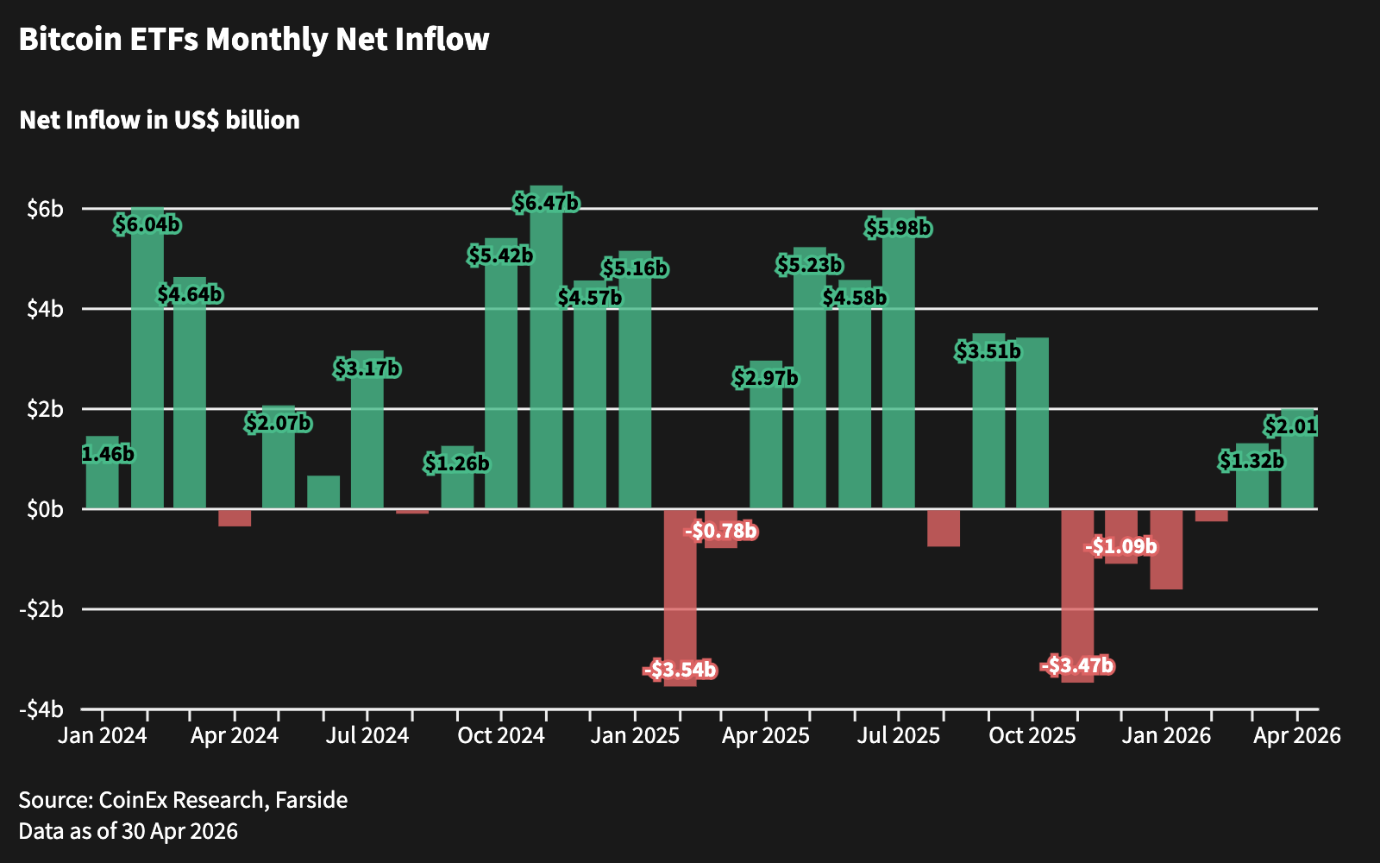
HONG KONG, May 07, 2026 (GLOBE NEWSWIRE) -- April was a recovery month for Bitcoin, but not a clean risk-on month. BTC gained roughly 12% over April, rebounding from the weakness earlier in the year and trading back toward the high-$70,000 range by month-end. The key driver was not just spot momentum but the return of institutional demand: U.S. spot Bitcoin ETFs recorded $1.97 billion in net inflows in April, the strongest monthly print of 2026 and well above March's $1.37 billion. Underneath the surface, however, DeFi was being stress-tested. The $292 million KelpDAO exploit left Aave with up to $230 million in potential bad debt and triggered $12 billion in TVL outflows, with capital rotating toward isolated-market lenders like Spark and Morpho. The macro backdrop reinforced the divergence. The Strait of Hormuz remained effectively closed, Brent briefly traded above $126, and the Fed delivered an 8-4 split hold at Powell's final FOMC — the most dissents since 1992. Markets are now pricing zero rate cuts in 2026.
Our view is that April revealed the market's new structure very clearly: Bitcoin now has a persistent, regulated ETF bid, while the broader crypto market remains acutely sensitive to macro shocks and protocol-level counterparty risk. BTC is becoming more institutionally owned; DeFi and altcoins are still being repriced through a risk-premium lens. We remain constructive on Q2 and are watching Fed messaging under Warsh and the CLARITY Act markup window as the two important variables.
ETFs Bid and DeFi Bleeds
Bitcoin’s rally in April was defined more by its origin than its destination. BTC recovered from the mid-$60,000 range and pushed toward the $79,000–$80,000 resistance zone, but it did not transition into a full bull-market breakout. Strength remained concentrated in Bitcoin and ETF-linked flows, while DeFi assets stayed under pressure following the KelpDAO/Aave incident.
ETF data was the clearest positive signal. U.S. spot Bitcoin ETFs absorbed nearly $2 billion in April, bringing year-to-date flows back into positive territory after earlier outflows.
The nature of this rally is important. April resembled a portfolio allocation phase rather than a high-conviction risk-on move. Institutional investors used ETFs to accumulate Bitcoin during drawdowns, while crypto-native capital turned defensive after the DeFi shock. The result is a two-speed market: Bitcoin holds up, while DeFi and altcoins continue to de-risk.
On the regulatory side, the CLARITY Act remained a focal point but lost momentum in the Senate due to unresolved issues around stablecoin yield. While still viable, timing has become more sensitive, with a potential markup window in May.
In Hong Kong, regulatory progress moved forward. The HKMA granted stablecoin licenses to Anchorpoint Financial and HSBC effective April 10, 2026. Regulated stablecoins are increasingly seen as the “cash leg” of on-chain finance, supporting settlement for RWAs, tokenized deposits, and institutional flows.
We believe Hong Kong’s framework is still underappreciated. The key challenge for institutions has never been technical functionality, but whether stablecoins meet accounting, legal, and compliance standards. A licensed HKD stablecoin system addresses this gap and complements Hong Kong’s broader digital asset infrastructure.
Oil Seems to Eat the Cuts
Macro remained the primary constraint on crypto markets. The Strait of Hormuz disruption continued to dominate energy markets, effectively restricting around 20% of global oil and gas supply. Brent crude briefly surged above $126 before settling closer to $114.
Oil is now acting as a direct transmission channel for inflation. Higher energy prices feed into transportation, production costs, and broader inflation expectations, reducing the Fed’s flexibility to cut rates. The liquidity narrative that had supported risk assets is, for now, delayed.
The April 28–29 FOMC meeting—Jerome Powell’s final as Chair—highlighted this tension. The Fed held rates at 3.5%–3.75% for a third consecutive meeting, but the 8–4 vote split marked the highest level of disagreement since 1992. One member favored a rate cut, while others pushed back against any easing bias. Kevin Warsh is expected to assume the chair role and lead the June meeting.
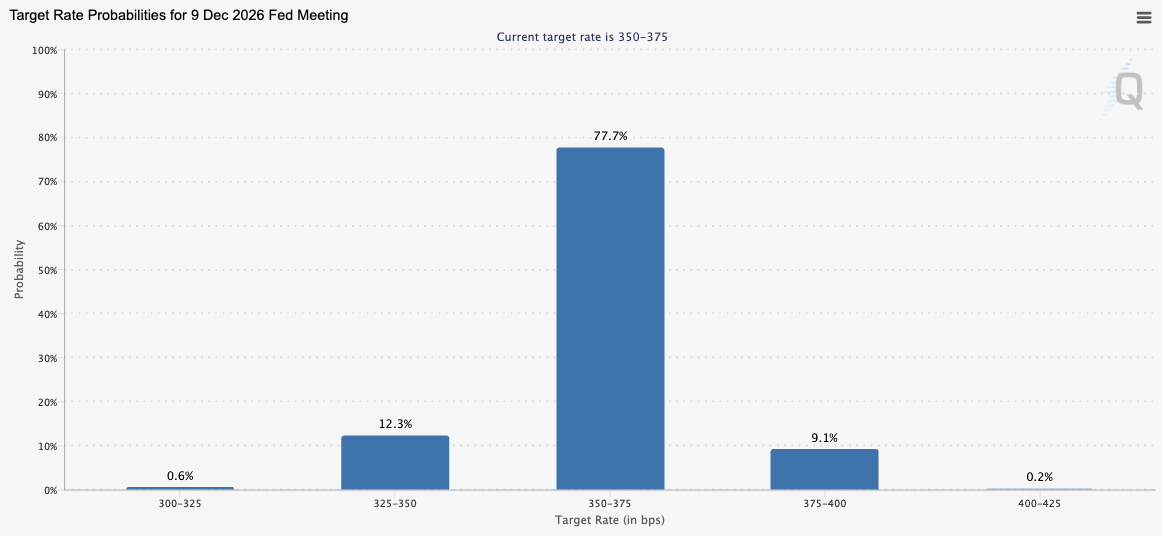
Source: CME FedWatch; Data as of 02 May 2026
Markets had already priced in a hold, but the aftermath confirmed a broader shift. Investors are now pricing zero rate cuts through 2026 and into 2027. Earlier expectations of one or two cuts have been fully removed, largely due to persistent inflation driven by energy prices.
Our view is that Bitcoin is increasingly trading as a macro reserve asset supported by ETF demand, while altcoins remain tied to liquidity conditions. As long as oil stays elevated and the Fed remains on hold, markets are likely to favor BTC while continuing to discount higher-risk DeFi exposures.
The KelpDAO/Aave Incident: A DeFi Stress Test
On April 18, a vulnerability in KelpDAO’s cross-chain bridge allowed an attacker to mint approximately 116,500 unbacked rsETH tokens, representing about 18% of supply and valued at $292 million. Instead of selling them, the attacker deposited around 89,567 rsETH into Aave as collateral and borrowed roughly $190 million in real assets.
Aave’s pricing system continued to value rsETH at pre-exploit levels, as it does not verify collateral origin. By the time the market was frozen, the borrowed assets had already been extracted. While Aave’s contracts were not compromised, the protocol was left with impaired collateral and potential bad debt ranging from $124 million to $230 million.
The market reaction was immediate. Aave’s TVL dropped from $26.4 billion to about $14.1 billion, reflecting over $12 billion in outflows.
In response, Aave and other protocols launched coordinated efforts to stabilize the system, with over $300 million in pledged support by April 27. While much of this remains subject to governance approval, it reflects industry coordination under stress.
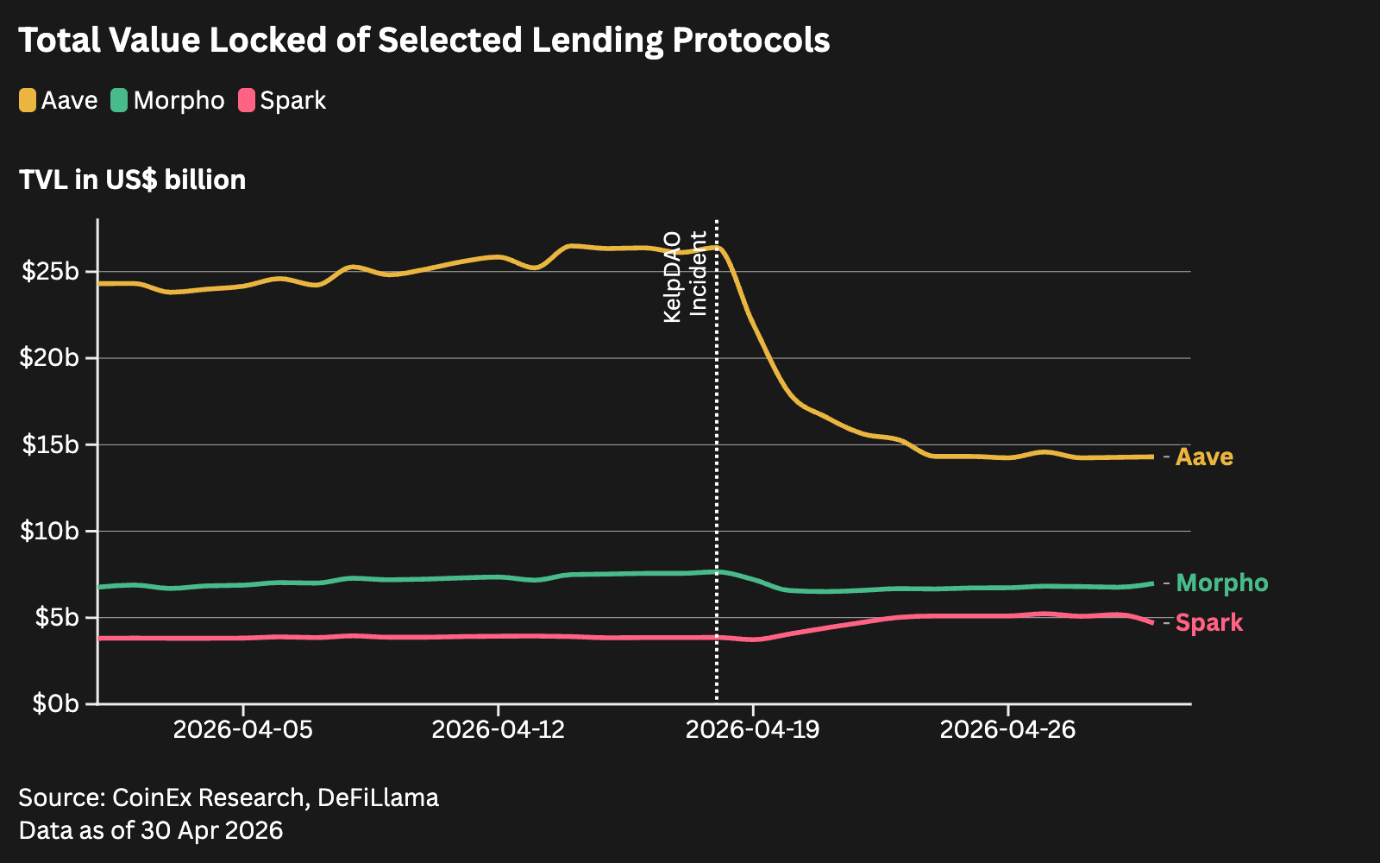
We see this as a real stress test for DeFi. The system held, but not without consequences. Capital rotated rather than exited entirely. Spark saw TVL rise significantly, while Morpho proved relatively resilient due to its isolated design.
We expect broader repricing across restaking and LST/LRT structures, as investors reassess layered exposure risks. This incident also followed multiple other security events in April, reinforcing the need for more realistic risk pricing. In bear markets, composability can amplify contagion.
Key Charts to Watch
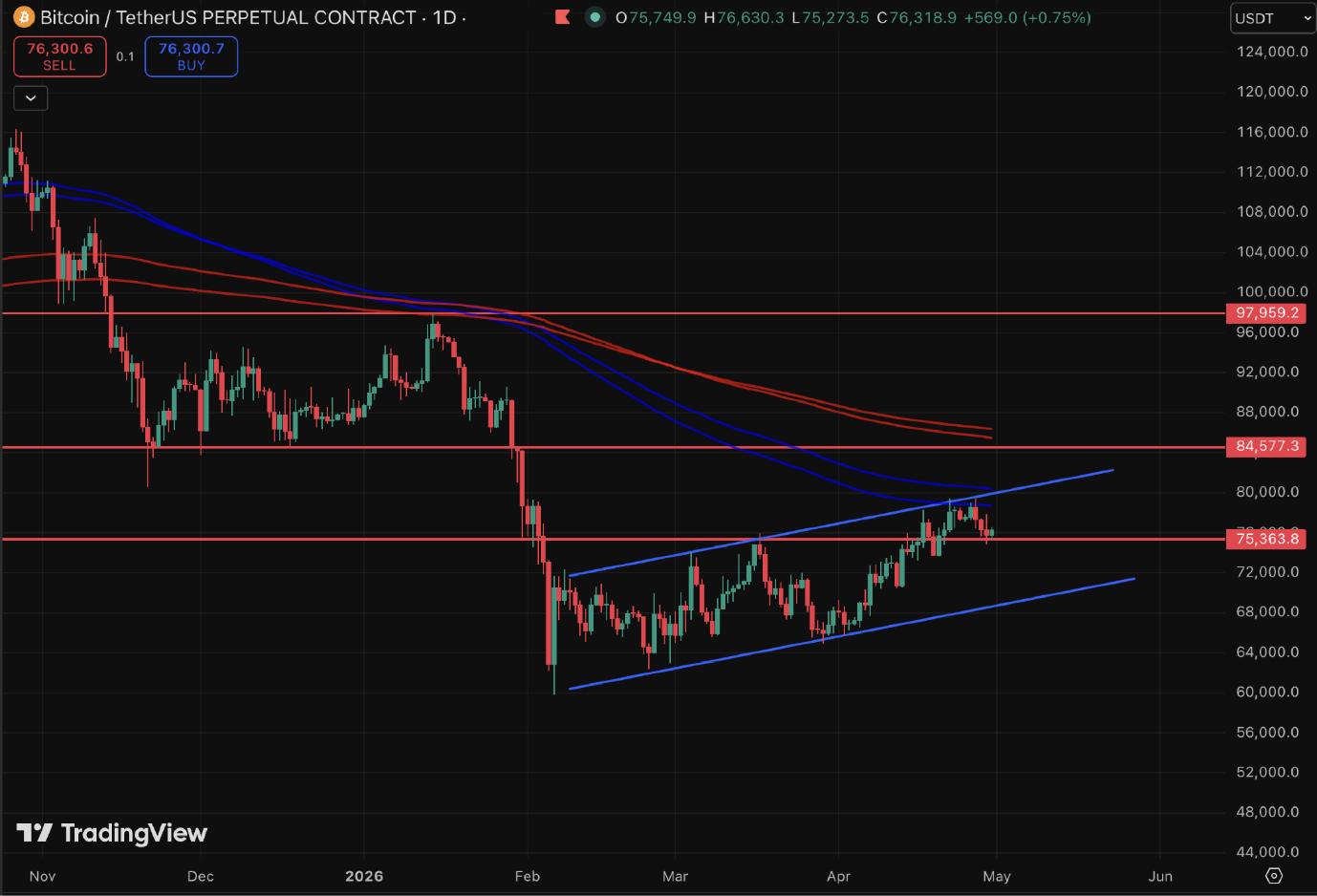
BTC gained approximately 11.8% in April, reclaiming the $75,000 level before pulling back. It is now testing this level as support. A breakdown could lead to a move toward $68,000–$72,000. On higher timeframes, BTC has not yet broken key resistance, and the rally lacks strong volume confirmation.
Implied volatility has dropped to a six-month low, suggesting the market is waiting for a new catalyst.
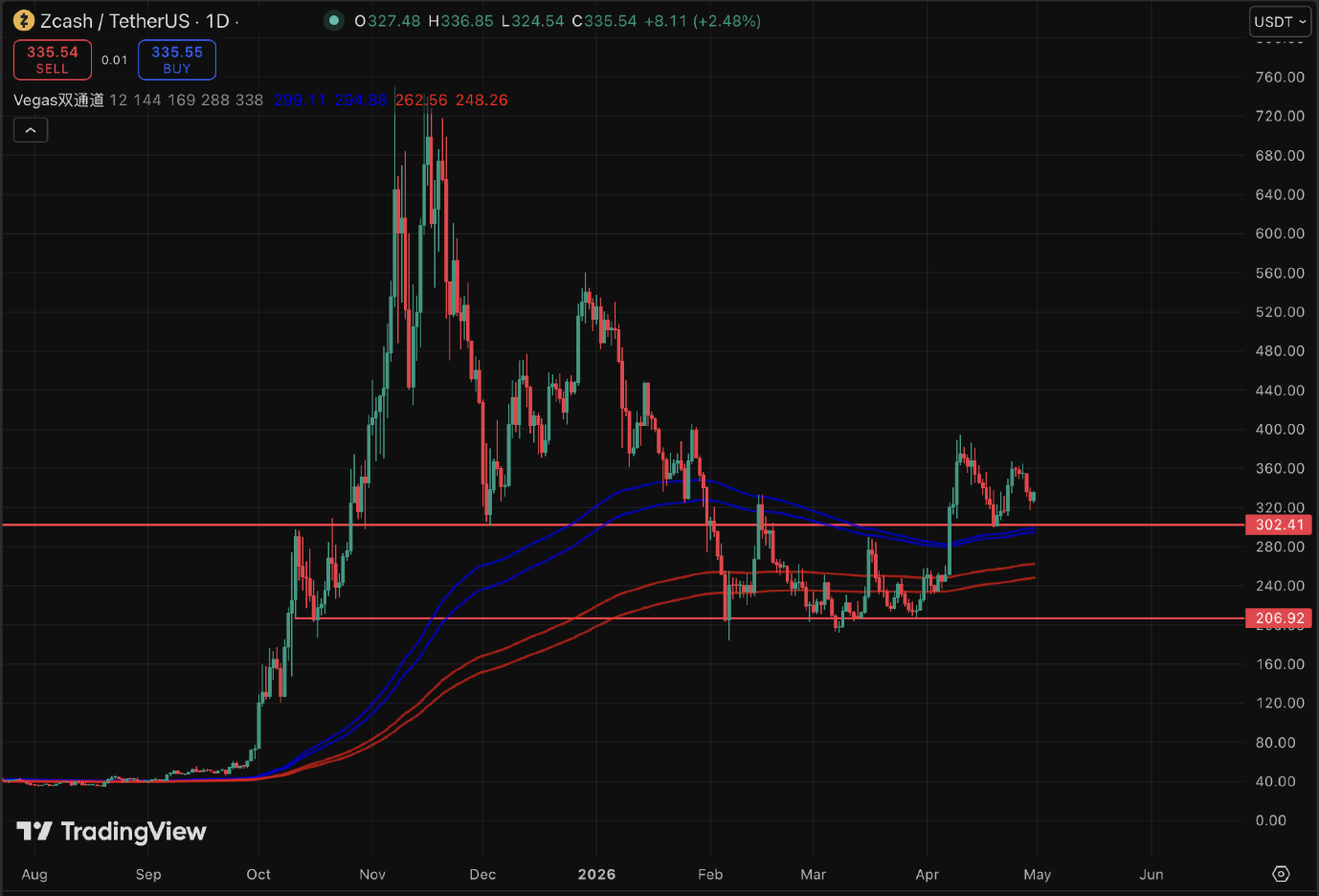
ZEC outperformed significantly, rising around 33% and peaking at gains above 50%. After a sharp rally, it has entered consolidation but continues to show relative strength. A retest of the $300 level is possible before further upside.
SpaceX Leads the Pre-IPO FOMO
Pre-IPO markets remained active, especially around major technology companies such as SpaceX, OpenAI, and Anthropic. These firms are increasingly viewed as key IPO candidates for 2026.
SpaceX attracted the most attention, with reports of a confidential IPO filing targeting a $1.75 trillion valuation. Additional developments, including potential investor events, reinforced expectations of a near-term listing.
Stablecoin Liquidity Supports the Recovery Case
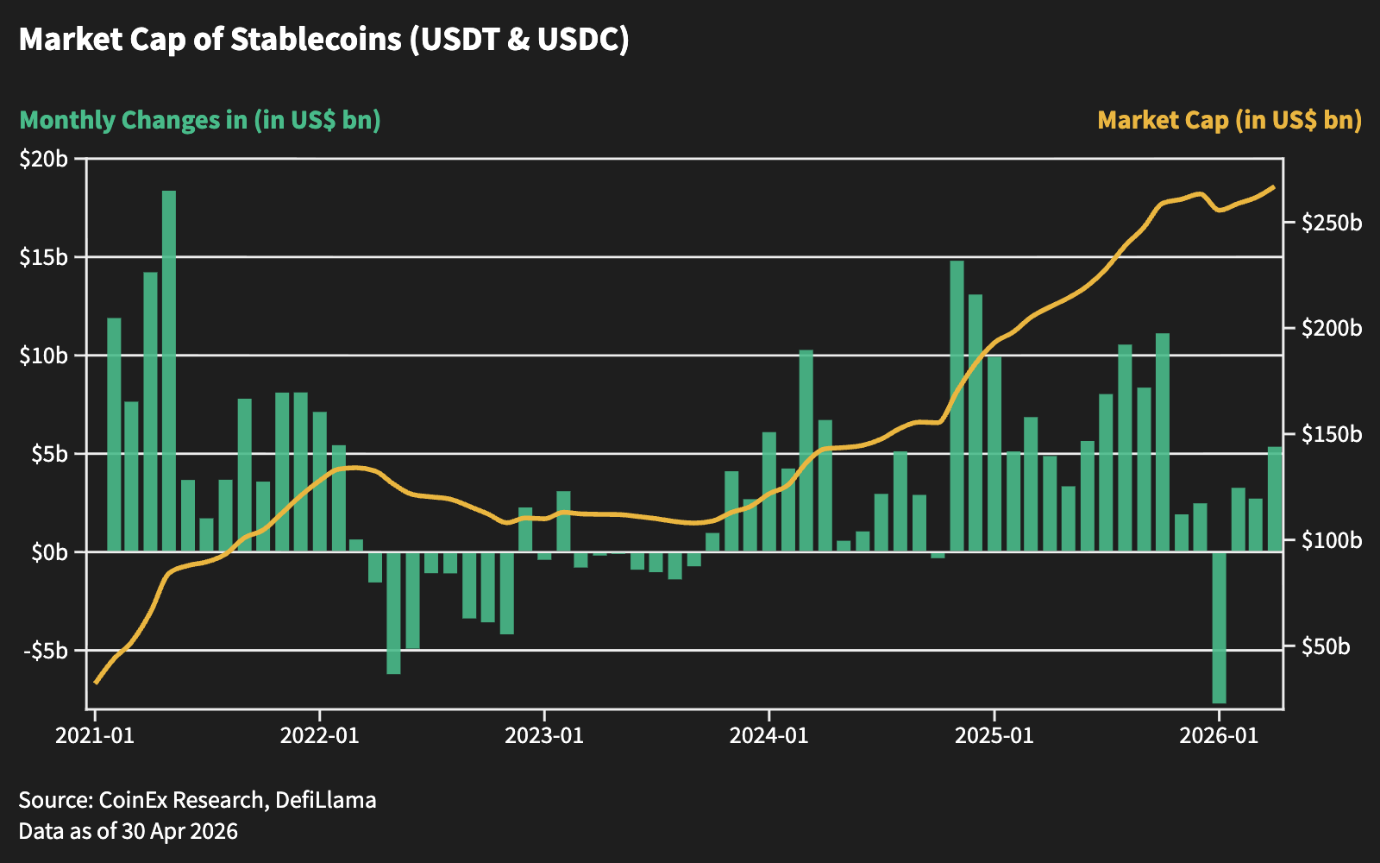
Stablecoin inflows reached $5 billion in April, the highest level in six months. Combined with flows since February, this fully offsets January’s $7 billion outflow.
Despite macro pressure, liquidity is improving steadily. Regulatory progress, including developments around the GENIUS Act, could further support institutional inflows.
We remain constructive on Q2 while closely monitoring Fed policy direction.
Disclaimer
The content provided in this report is for illustrative purposes only and is intended to offer insights into the cryptocurrency market. It is not, and should not be interpreted as, investment advice or recommendations. The information contained herein is based on sources believed to be reliable; however, we do not guarantee its accuracy, completeness, or suitability for any purpose, and it should not be relied upon as such. Any opinions expressed reflect a judgment at the date of publication and are subject to change without notice. Readers are advised to conduct their own research and due diligence and, where appropriate, seek professional advice before making any investment decisions. The authors and publishers of this report accept no liability for any loss or damage arising from the use of the information provided.
Do Your Own Research.
About CoinEx
Founded in 2017, CoinEx is a global cryptocurrency exchange committed to making trading easier. The platform provides a range of services, including spot and margin trading, futures, swaps, AMM, and financial management services for over 5 million users across 200+ countries and regions.
Since its establishment, CoinEx has steadfastly adhered to a "user-first" service principle. With the sincere intention of nurturing an equitable, respectful and secure crypto trading environment, CoinEx enables individuals with varying levels of experience to effortlessly access the world of cryptocurrency by offering easy-to-use products.
About CoinEx Research
CoinEx Research is the research arm of the CoinEx Exchange, dedicated to providing in-depth analysis and research reports on the blockchain and cryptocurrency industry.
The team provide users with professional market insights by tracking market trends, analyzing project white papers and technical documents, evaluating project teams and development prospects, etc. Our reports cover macro markets, blockchain technology, digital assets, DeFi, NFTs, and other fields in the various forms of research publication.
To see more of CoinEx Research's reports and insights, visit our CoinEx Insight.
Contact:
CoinEx
pr@coinex.com
Legal Disclaimer: This article is provided on an “as-is” basis, without warranties or representations of any kind, express or implied. The media platform assumes no responsibility or liability for the accuracy, content, completeness, legality, or reliability of the information presented. Any complaints, claims, or copyright concerns related to this article should be directed to the content provider mentioned above.
Photos accompanying this announcement are available at
https://www.globenewswire.com/NewsRoom/AttachmentNg/1cef97ee-a3d3-477b-8c0b-800862f862bc
https://www.globenewswire.com/NewsRoom/AttachmentNg/9cb6882b-2617-4cf1-b605-8587662af2e0
https://www.globenewswire.com/NewsRoom/AttachmentNg/89a738e5-768b-44f2-857b-e574de7dcbbe
https://www.globenewswire.com/NewsRoom/AttachmentNg/2b2f518a-4198-44f6-ad2b-95e2da685b12
https://www.globenewswire.com/NewsRoom/AttachmentNg/dd81bf01-030b-4166-803a-d9ebe99ba821
https://www.globenewswire.com/NewsRoom/AttachmentNg/93d986a6-128e-480e-9264-6baf2199c4f9
